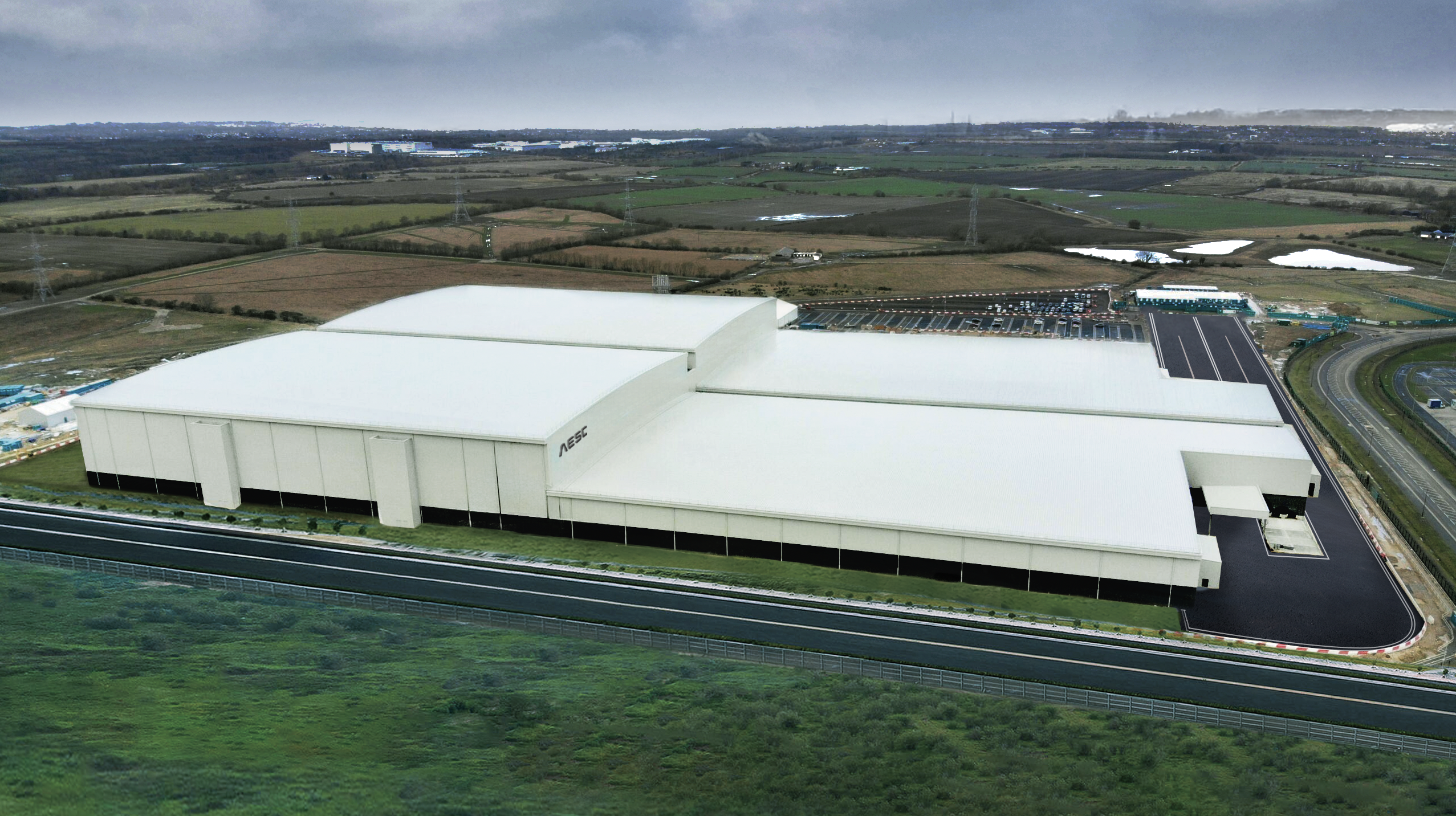
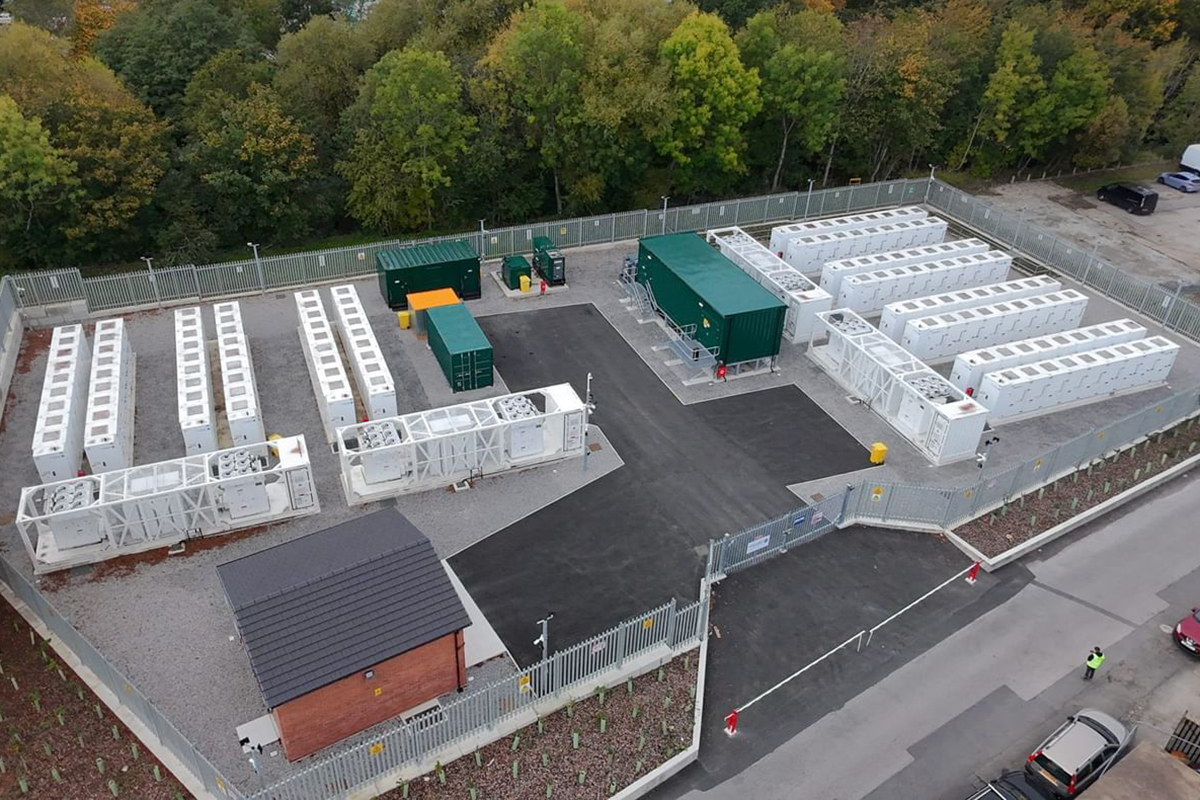
South Korean battery giant LG Energy Solution disclosed in a regulatory filing on December 17 that it had received notice from Ford Motor Company to cancel a battery supply order worth 9.6 trillion Korean won (approximately $6.5 billion), marking one of the largest order cancellations in the company’s history.
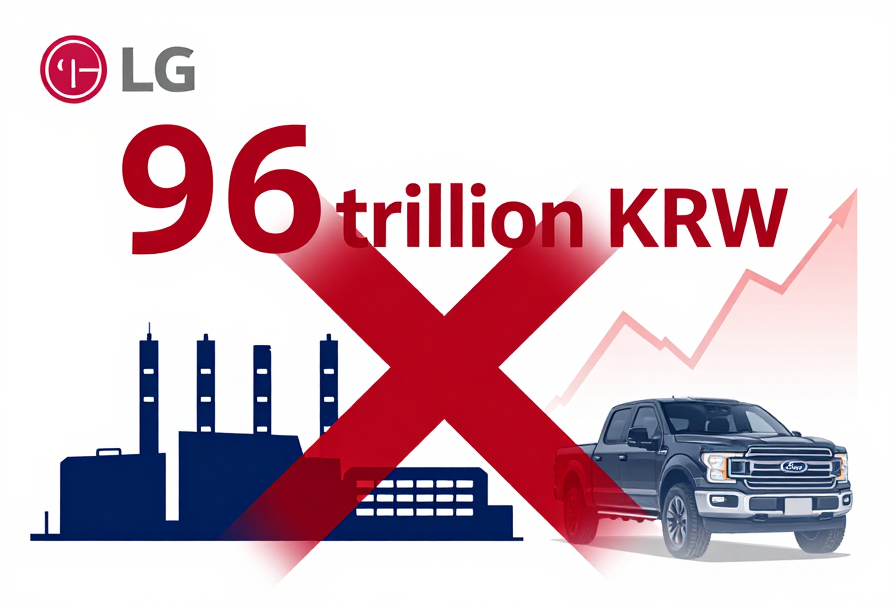
According to the regulatory filing, LG Energy Solution stated: “This matter concerns the counterparty’s decision to discontinue the production of certain electric vehicle models due to recent policy changes and shifts in EV demand forecasts, and the subsequent notice of contract termination.” The contract, originally signed in October 2024, planned to supply Ford with 34 gigawatt-hours (GWh) of batteries from 2026 to 2030, plus an additional 75 GWh for Ford’s commercial vehicles from 2027 to 2032, totaling 109 GWh.
The batteries were planned to be produced at LG Energy Solution’s plant in Poland. The contract termination is directly related to Ford’s recent major adjustment of its electric vehicle strategy, as the company has decided to scale back its all-electric vehicle lineup and instead focus on hybrid trucks and energy storage business.
Ford’s Major EV Strategy Pivot
Ford ceased production of the all-electric F-150 Lightning pickup truck in October this year, and this vehicle, once considered Ford’s flagship electrification product, will be completely discontinued from the market. It will be replaced by a planned Extended-Range Electric Vehicle (EREV) version, which will feature a gasoline generator as auxiliary power and offer a range exceeding 700 miles.
Ford expects to incur approximately $19.5 billion in special item charges from this strategic adjustment, with $12.5 billion to be recognized in the fourth quarter of 2025 and the remaining $7.0 billion to be spread across 2026 and 2027. Of this $19.5 billion, approximately $5.5 billion represents cash charges related to vehicle cancellations and associated costs, with the majority to be paid in 2026.
Ford CEO Jim Farley described this shift as a “customer-driven adjustment,” stating that the company is looking at the market as it is today, not as everyone predicted it to be five years ago. By 2030, Ford expects approximately 50% of its global volume to be hybrids, extended-range EVs, and fully electric vehicles, up from 17% in 2025.
South Korean Battery Makers Face Consecutive Setbacks
The cancellation of LG Energy Solution’s order is just the latest case of South Korean battery manufacturers facing setbacks in the U.S. market. Just a week earlier, another South Korean battery maker, SK On, announced the termination of its BlueOval SK joint venture with Ford, which had initially planned to invest $11.4 billion to build three battery factories in Tennessee and Kentucky.
Under the restructuring agreement, Ford will take over the two battery plants in Kentucky, while SK On will operate the factory at the BlueOval City campus in Tennessee. This split is expected to be completed in the first quarter of 2026. SK On stated that this move aims to improve operational efficiency, respond more effectively to evolving market dynamics, and accelerate expansion into the Energy Storage System (ESS) market.
SK On recorded an operating loss of 124.8 billion won (approximately $84.72 million) for the July-September 2025 period, nearly double the 66.4 billion won loss in the previous quarter, primarily due to slowing EV battery shipments.
Weakening EV Market Demand
Ford’s strategic shift reflects the real challenges facing the U.S. electric vehicle market. In an 8-K filing with the U.S. Securities and Exchange Commission (SEC), Ford explained that consumer adoption of electric vehicles has been lower than expected, especially since tax credits that incentivized such vehicles are no longer in place.
Additionally, Ford noted that possible relaxation of federal emissions standards under the Trump administration and laws that would prevent California and other states from implementing separate, stricter emissions standards could also weaken the electric vehicle market. Ford executives stated that “changes in the regulatory environment” were part of the “entire landscape” that pushed the company to discontinue the Lightning and work on the extended-range version instead.
Ford Reconfigures Production Resources
Facing excess battery capacity, Ford announced it will launch an all-new battery energy storage system business, repurposing existing EV battery plants in Kentucky and Michigan instead of letting excess capacity sit idle. Lisa Drake, Ford’s vice president of technology platforms, stated that grid-scale utility customers and data center providers are potential customers, and this business adjustment is a “natural adjacency” for Ford.
Ford plans to invest $2 billion to retool the Kentucky plant to produce stationary storage batteries instead of EV batteries, using technology licensed from China. This adjustment will result in approximately 1,600 Kentucky battery plant workers losing their jobs, though they will be able to reapply when the plant reopens in about two years, at which time Ford plans to hire 2,100 employees.
Impact on Stock Markets and Supply Chain
Despite facing massive write-downs, Ford raised its 2025 adjusted EBIT guidance to about $7 billion from the previous expectation of $6 billion to $6.5 billion, and reaffirmed its adjusted free cash flow guidance at the high end of the $2 billion to $3 billion range. This news has somewhat eased investor concerns.
LG Energy Solution’s stock closed Wednesday down 0.6% at 415,500 won, following a 6% decline the previous day. The company stated in its announcement that the disclosed termination amount was calculated by applying battery prices at the time of contract signing to the originally agreed supply volume, making it an estimate rather than a realized loss.
Analysts note that the cancellation of LG Energy Solution’s contract with Ford, along with the dissolution of SK On’s joint venture, signals that South Korean battery manufacturers need major strategic adjustments in the U.S. market. As U.S. electric vehicle demand slows and the policy environment changes, these companies are accelerating their transformation toward the energy storage system market to offset losses in the EV battery business.
Looking Ahead
Ford stated that despite canceling large pure electric vehicle projects, the company remains committed to building an affordable electric vehicle lineup. Ford’s first next-generation electric vehicle will be a midsize electric pickup, expected to launch in 2027 with a target price of $30,000. The company has also developed lithium manganese-rich battery chemistry technology, which is expected to be introduced into its lineup before the end of the decade.
However, this strategic shift also means that Ford’s $11 billion electric vehicle manufacturing investment plan announced in 2021 has been essentially overturned. The fate of the new electric vehicle assembly plant and at least three battery joint venture factories originally planned for Tennessee is now uncertain, with the next-generation F-150 electric pickup’s production location changed from Tennessee’s BlueOval City campus to Michigan, and production delayed to 2028.
This series of changes highlights the complexity and challenges of the global automotive industry’s electrification transformation. While electric vehicles are still seen as the future trend, how to balance technological innovation, infrastructure development, and consumer demand has become a practical issue that all automakers and supply chain companies must face.