Farasis Energy Launches Solid-State Battery Pilot Line with 0.2 GWh Capacity by Year-End
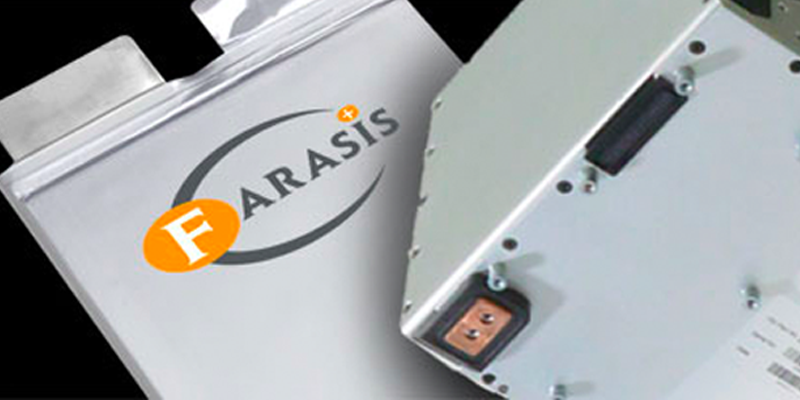
On July 21, Farasis Energy—a leading Chinese battery manufacturer backed by Mercedes-Benz—announced that its sulfide-based solid-state battery program has officially entered the pilot production and delivery phase. According to IT-Home, the company is set to complete a dedicated pilot production line with a design capacity of 0.2 GWh by the end of 2025. This development marks a major milestone in the commercial journey of next-generation solid-state battery technology.
The company plans to deliver 60Ah sulfide solid-state battery samples to strategic partners, including Mercedes-Benz, within the current development cycle. Farasis has also reported strong interest from new energy vehicle (NEV) manufacturers beyond its existing customer base and aims to expand sample deliveries to additional OEMs throughout 2025.
A Clear Roadmap to GWh-Scale Solid-State Manufacturing
Looking ahead, Farasis Energy anticipates ramping its all-solid-state battery production to gigawatt-hour (GWh) levels as early as 2026. This projection is based on both favorable market demand and internal strategic planning.
The company’s sulfide-based solid-state battery roadmap represents a highly competitive trajectory in the EV battery market. Unlike oxide-based designs pursued by some competitors, sulfide solid electrolytes offer superior ionic conductivity and better compatibility with high-energy-density materials, making them more suitable for mass production in the near term.
Technical Architecture and Energy Density Goals
Farasis has adopted a hybrid cell design that combines high-nickel ternary cathodes with either high-silicon or lithium metal anodes, all encapsulated in a soft-pack format using stacked cell architecture. This design approach aims to achieve energy densities exceeding 400 Wh/kg—far beyond the capabilities of conventional lithium-ion technology.
According to the company, these cells have already entered real-world testing and exhibit excellent cycling stability and performance under practical conditions.
To further push the boundaries, Farasis is also developing a second solid-state battery platform based on oxide/polymer composite electrolytes. This system will pair lithium metal anodes with high-nickel cathodes, targeting an energy density of up to 500 Wh/kg. Development of compatible composite electrolyte materials is complete, and the company has introduced proprietary techniques for manufacturing ultra-thin electrolyte layers essential for high-efficiency operation.
Robust Safety Features Built Into the Chemistry
Safety remains a cornerstone of Farasis Energy’s solid-state development efforts. The company’s sulfide-based cells are engineered with a proprietary self-shutdown function to prevent thermal runaway during overheating or mechanical damage.
Moreover, the solid-state electrolytes have successfully passed puncture, shear, and thermal chamber testing, proving their resilience under extreme conditions. These safety features are critical for commercial applications, particularly in electric vehicles where stringent safety certifications are mandatory.
Strategic Backing and Global Partnerships
Founded in 2009 and listed on the Shanghai Stock Exchange Star Market in 2020, Farasis Energy has steadily grown into a tier-one battery supplier with a strong global reputation. The company has consistently led China’s soft-pack battery market, ranking first in domestic shipments for seven consecutive years (2017–2023).
Farasis’s relationship with Mercedes-Benz has been a key driver of its innovation pipeline. The German automaker is not only a strategic investor but also a customer—Farasis supplies battery cells for models like the EQE and EQS directly from its production plants in China.
Beyond Mercedes-Benz, Farasis maintains important partnerships with Geely, Turkish automaker Togg, and FAW. Its joint venture “Siro,” established with Togg, further reinforces its reach in the European and Middle Eastern battery markets.
In early 2025, control of the company shifted to the Guangzhou Municipal Government through Guangzhou Industrial Investment Holding Group. This move is expected to enhance Farasis’s long-term capital access and strengthen its foothold in national strategic initiatives.
Market Outlook and Industry Positioning
With major OEMs seeking safer, higher-energy-density batteries to meet next-generation EV demands, Farasis’s dual solid-state strategy could place it among the front-runners of battery innovation. By focusing on sulfide-based cells for near-term scaling and simultaneously advancing oxide-polymer platforms for long-term breakthroughs, Farasis is effectively hedging technological risk while maintaining competitiveness.
Analysts see the company’s pilot production and customer sample delivery as timely, considering the growing urgency for automakers to diversify battery supply chains and reduce reliance on traditional lithium-ion chemistries.
Conclusion: Leading the Charge into the Solid-State Era
Farasis Energy’s transition to pilot production of solid-state batteries signals a new chapter not only for the company but also for the broader EV industry. By targeting mass production levels within a year and offering best-in-class energy density and safety features, Farasis positions itself as a strong contender in the race to commercialize solid-state batteries.
With the backing of Mercedes-Benz, a solid customer base, and continuous innovation, Farasis is now one of the few global players with the technical depth, strategic partnerships, and manufacturing readiness to make solid-state batteries a commercial reality in the near future.