EV in Guiyang Bursts into Flames After Sudden Impact from Uneven Pavement – Entire Vehicle Destroyed
On June 20, local media reported a dramatic incident involving a new energy vehicle (NEV) in Guiyang, Guizhou Province. The event occurred on Hubin Road in the Changling subdistrict of Guanshanhu District. A privately-owned electric vehicle suddenly caught fire after encountering a violent jolt from the ground while entering a parking lot, leading to an intense blaze that engulfed the entire car.
Sudden Bounce Before the Blaze
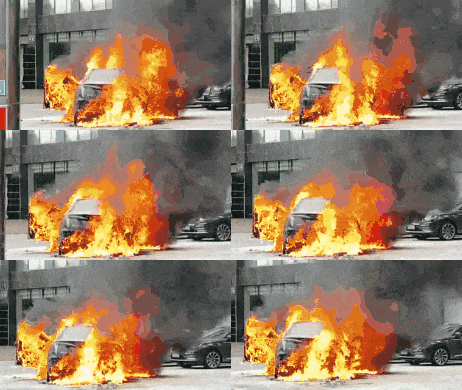
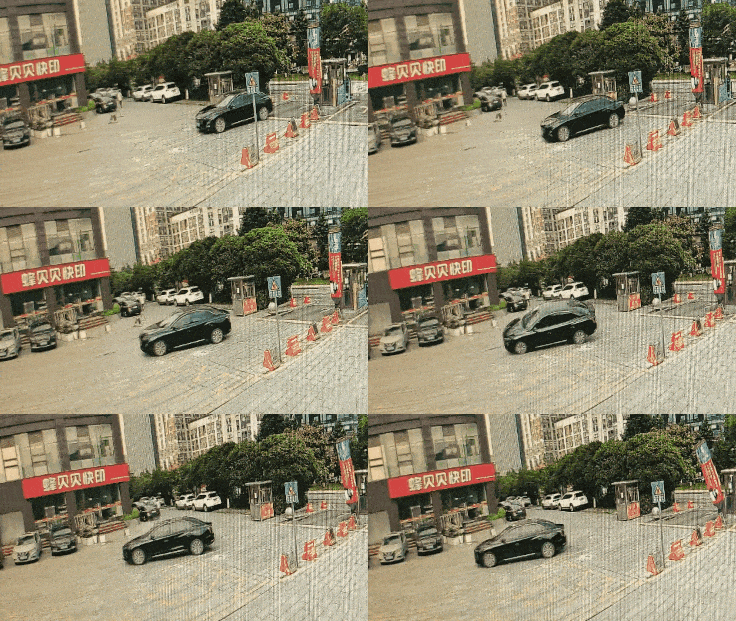
Surveillance footage from the parking lot captured the sequence in shocking detail. After passing through the barrier gate, the EV was seen moving slowly. Just meters ahead, the vehicle suddenly jolted upward, almost tipping over to the driver’s side. Within moments, smoke began pouring from the front of the vehicle, followed by visible flames.
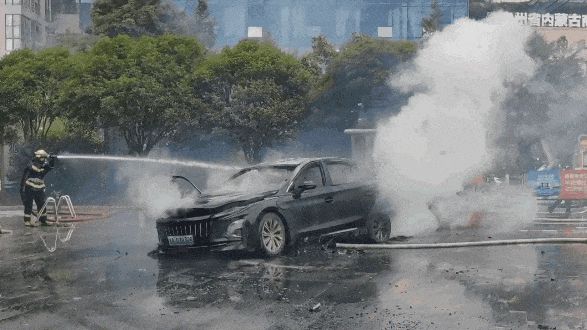
The driver, clearly startled, immediately exited the vehicle and called for assistance. Nearby parking lot staff attempted to douse the flames using handheld fire extinguishers, but their efforts proved ineffective. The fire quickly intensified and consumed the car, leaving little more than a burnt-out shell by the time emergency services arrived.
Firefighters Arrive, But It’s Too Late
Local firefighters responded swiftly after receiving the emergency call. Upon arrival, they found the vehicle entirely engulfed in flames. Using water jets and suppression foam, they were eventually able to extinguish the fire. However, by that point, the car was completely destroyed. Fortunately, no injuries or fatalities were reported.
Suspected Cause: Battery Damage from Road Impact
The driver later told reporters that the vehicle did not display any warning indicators prior to the incident and was functioning normally until the sudden jolt. Based on the footage and the sequence of events, the fire is suspected to have been triggered by a collision between the battery pack and a piece of raised pavement or ground tile.
Experts believe the car’s sudden bounce was caused by uneven pavement—potentially loose or protruding bricks in the parking lot surface. As the car’s undercarriage struck the elevated surface, the impact may have damaged the lithium-ion battery modules located beneath the chassis, triggering a short circuit and a rapid thermal runaway event, commonly referred to as a battery fire.
EV Battery Fire Risks: A Growing Concern
This incident is the latest in a growing number of high-profile EV fire cases across China and globally. While EVs are generally safe and subject to strict testing, their lithium-ion battery systems are inherently vulnerable to punctures, overcharging, overheating, and physical damage.
Once compromised, these batteries can ignite spontaneously, and the resulting fires are notoriously difficult to extinguish due to the risk of re-ignition and the involvement of volatile chemicals. Traditional fire extinguishers are often ineffective, requiring specialized foam or water to suppress the flames fully.
Industry insiders note that road quality and infrastructure maintenance now play a direct role in EV safety, especially as battery packs continue to be mounted in low-slung configurations for better vehicle balance and range.
Lack of Official Response
As of the time of writing, no official statement or investigation report has been released by local authorities. The responsibility for the incident—whether attributed to vehicle design flaws, poor road maintenance, or a combination of both—is still under investigation.
Calls are growing for both EV manufacturers and urban management departments to take more proactive measures. On the one hand, manufacturers are being urged to improve battery casing strength and implement better impact protection. On the other, city governments are being reminded of their duty to maintain road and parking surfaces to a standard that does not endanger vehicles or lives.
Broader Implications for EV Industry
As electric vehicles become more popular due to their eco-friendly nature and lower operating costs, concerns around safety—especially battery-related fire hazards—are coming to the forefront. This incident in Guiyang serves as a stark reminder that even a small oversight in road maintenance or a seemingly minor collision can have catastrophic consequences.
In many cities, public infrastructure such as road tiles, underground parking lots, and speed bumps are not originally designed with EV battery placement in mind. The current situation suggests the need for a re-evaluation of urban planning standards in the EV era.
Moving Forward: What Can Be Done?
To prevent similar incidents in the future, several measures are being proposed by experts:
- Reinforced Battery Protection – Manufacturers should consider additional shielding around battery modules, especially in the undercarriage area.
- Improved Infrastructure Inspection – Municipalities must regularly inspect parking lots and road surfaces for loose or uneven materials that could pose risks to low-clearance vehicles.
- Real-Time Vehicle Monitoring – Incorporation of real-time battery diagnostics could provide early warning signs of damage or overheating.
- Public Awareness – Drivers should be informed about how to respond to battery smoke, and parking lot operators should be trained to handle EV fire risks.
Conclusion
The Guiyang EV fire incident is not just an isolated technical fault—it highlights systemic challenges at the intersection of rapid EV adoption and aging urban infrastructure. As EVs become more integrated into daily life, both manufacturers and governments must act to ensure that convenience does not come at the cost of safety.
The case is still under review, and authorities are expected to release an official update soon. Until then, the video of a car being “bounced” into flames will continue to resonate as a powerful symbol of modern transportation’s growing pains.