Samsung SDI has entered the preparation phase for mass-producing side-terminal batteries, a next-generation battery design that positions terminals on the sides rather than the top of prismatic cells. According to industry sources on October 19, the South Korean battery manufacturer is retrofitting portions of its production lines at the Göd 1 plant in Hungary, which currently produces older-generation batteries, to accommodate side-terminal battery manufacturing.
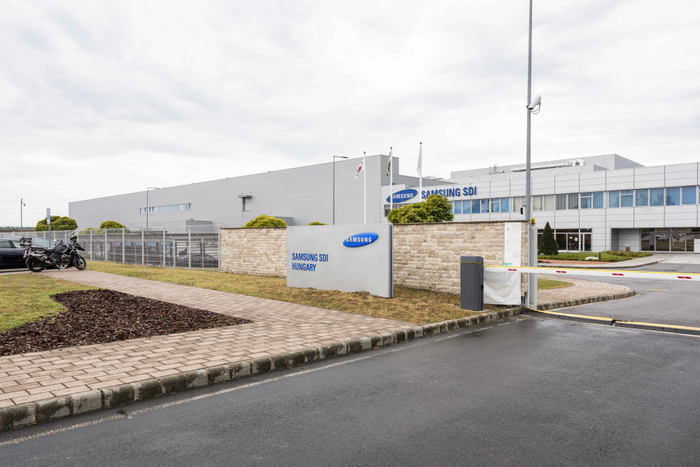
The company has recently placed equipment orders for the facility, which supplies batteries to major European automakers including BMW, Volkswagen, and Stellantis. Considering the timeline for equipment delivery, installation, and trial operations, full-scale mass production is projected to begin in 2027. Industry sources indicate that Volkswagen will be the first customer to receive Samsung SDI’s side-terminal batteries.
Understanding Terminal Configuration
Terminals serve as the electrical connection points on batteries, facilitating current flow between the battery and external systems. In conventional top-terminal (or unidirectional) batteries, both positive and negative terminals are positioned on the top surface. Side-terminal (or bidirectional) batteries relocate these terminals to opposite sides of the cell.
The side-terminal design offers significant advantages in space utilization, allowing manufacturers to maximize internal volume for energy storage materials. This configuration enables higher energy density compared to traditional top-terminal designs, as internal space can be used more efficiently without accommodation constraints for top-mounted terminals.
Enhanced Thermal Management Capabilities
One of the key benefits of side-terminal batteries is their compatibility with dual cooling systems, where cooling plates can be installed on both the top and bottom surfaces. This bidirectional thermal management approach provides more effective heat dissipation and helps maintain uniform temperature distribution across the battery pack.
The configuration also promotes more uniform current flow patterns throughout the cell, which can extend battery cycle life and improve overall performance. Additionally, the horizontal orientation of side-terminal batteries makes them suitable for vehicle designs requiring lower battery pack heights.
Expanding Product Portfolio
Traditional top-terminal batteries offer their own advantages, including shorter current pathways that reduce internal resistance and simplified packaging processes that enhance manufacturing productivity. Samsung SDI’s decision to expand into side-terminal battery production reflects the company’s strategy to meet diverse form factor requirements from global automakers.
For automotive manufacturers, the ability to customize battery dimensions—including length, height, and power output—within the same prismatic format allows for optimal integration with specific vehicle platforms.
An industry analyst noted that while top-terminal batteries contain more unused internal space, side-terminal configurations enable more efficient volume utilization, resulting in superior energy density. However, the analyst emphasized that rapidly reducing production costs for these new-generation products will be crucial for establishing competitive advantage in the market.
Samsung SDI’s Göd facility in Hungary has been a cornerstone of the company’s European operations, with the combined capacity of its plants in the region reaching approximately 40 GWh annually. The transition to side-terminal production represents the company’s commitment to technological advancement and customer-specific customization in the rapidly evolving electric vehicle battery sector.
As the automotive industry continues its transition toward electrification, battery manufacturers like Samsung SDI are diversifying their product offerings to address varying vehicle architectures, performance requirements, and cost considerations across different market segments.