The UK’s electricity sector has achieved a significant milestone, with record levels of renewable energy generation in 2024. New data reveals a year of substantial growth and innovation, despite facing some challenges in the final quarter. The shift towards cleaner energy sources is accelerating, positioning the UK as a leader in the global transition to a low-carbon future.
Record-Breaking Year for Renewables
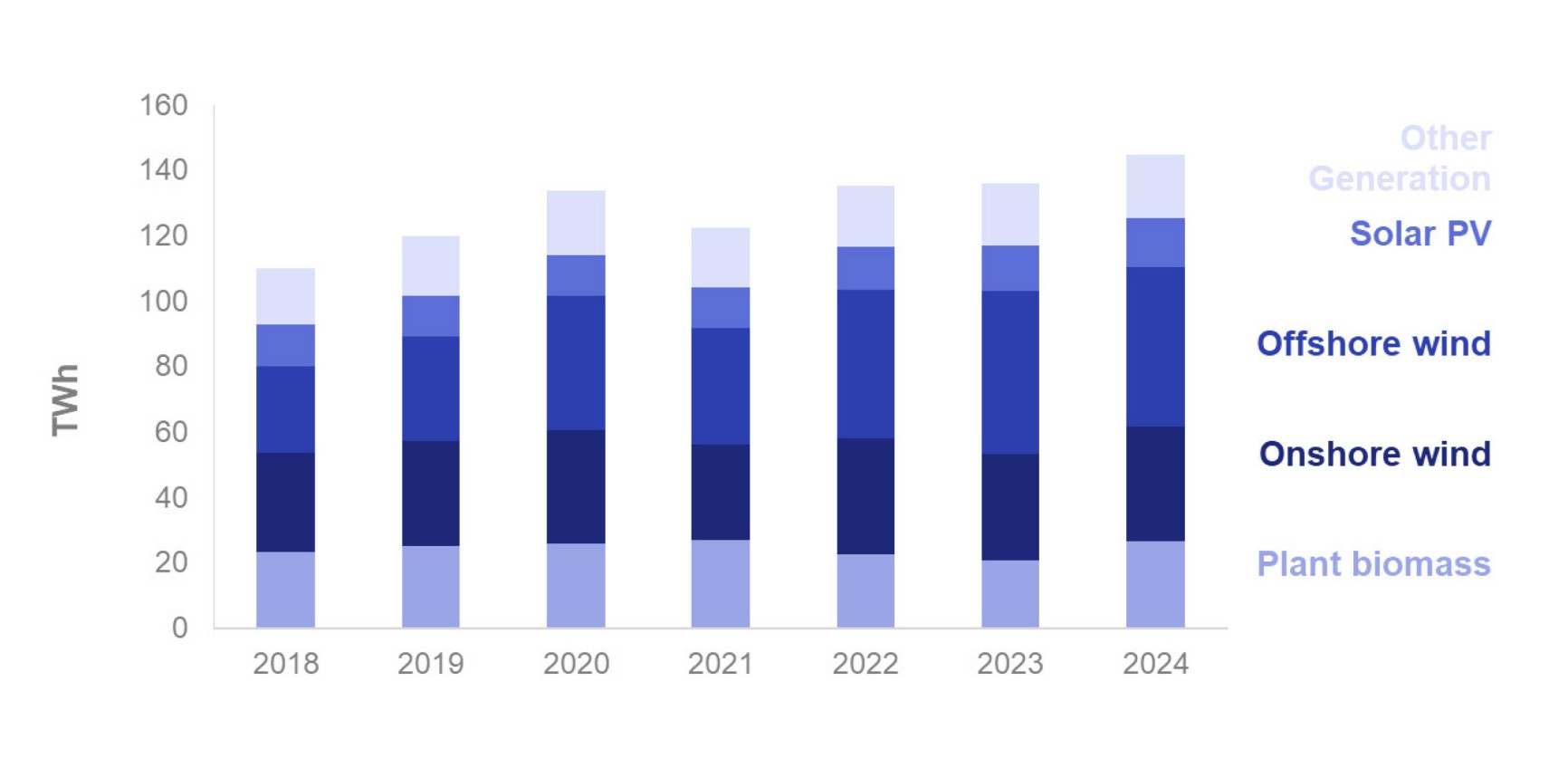
Overall, 2024 saw a surge in renewable electricity generation, driven by significant increases in wind, solar, and bioenergy. While the final quarter presented some headwinds, the year’s performance underscores the growing importance of renewables in the UK’s energy mix. The total installed capacity continues to expand, with new projects coming online and contributing to a more sustainable power supply.
Wind Power Leads the Charge
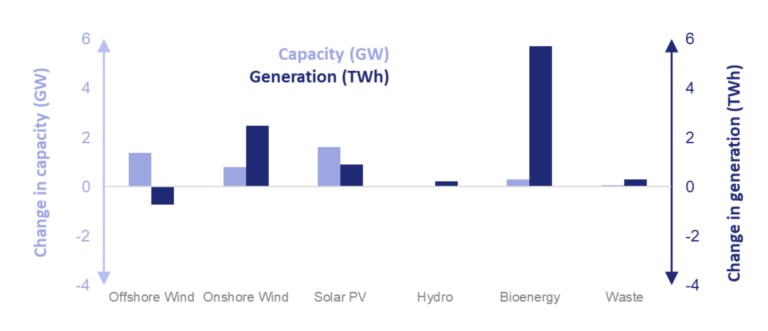
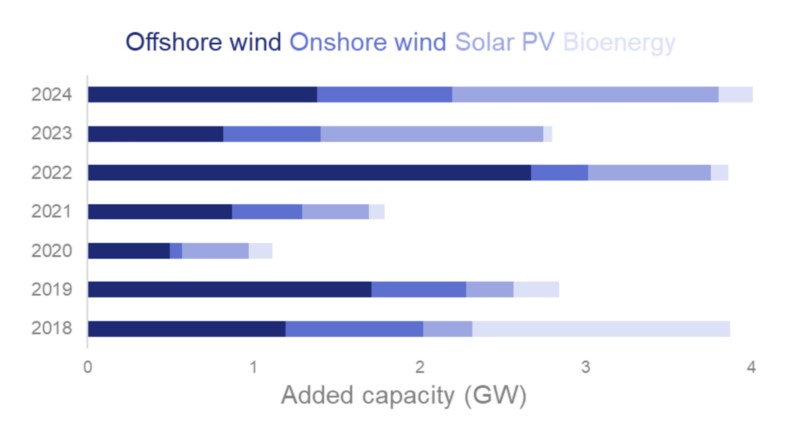
Wind energy remains a cornerstone of the renewable revolution. New capacity additions, including the Neart na Gaoithe (NnG) and Moray West projects in Scotland, have bolstered the sector. While offshore wind generation faced challenges in Q4 due to lower wind speeds and a fault with a subsea export cable, onshore wind demonstrated a robust 7.6% increase in generation. The combined efforts of both onshore and offshore wind resulted in a record overall wind generation figure.
Solar Power Shines Brightly
Solar photovoltaic (PV) generation also achieved a record high, with a 9.9% increase in installed capacity. The addition of 1.6 GW of new solar capacity, the largest since 2016, demonstrates the growing popularity of solar energy for both large-scale projects and domestic installations. The proliferation of smaller, domestic solar installations – a staggering 147,000 new installations in 2024 alone – highlights the widespread adoption of solar technology across the country.
Bioenergy Rebounds with a Strong Performance
Bioenergy experienced a significant rebound in 2024, achieving a record generation figure. This was largely due to the return of plant biomass to more typical levels following reduced output from major plants in 2022 and 2023. Increased generation from energy from waste and anaerobic digestion further contributed to the overall bioenergy success. The Teesside plant biomass facility, commissioned in the first quarter, added substantial capacity.
Challenges in Q4 and Future Outlook
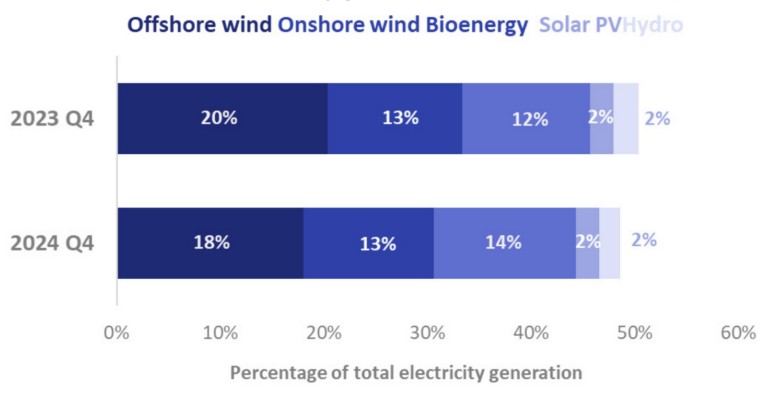
Despite the overall positive performance, the fourth quarter presented some challenges. Lower average wind speeds, particularly impacting offshore wind, and a fault with a subsea export cable led to a slight decrease in renewables’ share of electricity generation compared to the previous year. While the new large-scale wind projects have added significant capacity, their full impact on generation will be realized as they become fully operational.
Diversification and Decentralization
The growth in renewable energy is not solely driven by large-scale projects. The significant increase in smaller, decentralized installations, particularly in the residential sector, demonstrates a broader shift towards a more diversified and resilient energy system. This trend is expected to continue, with more households and businesses embracing renewable energy solutions.
Government Support and Future Investments
The UK government’s commitment to renewable energy, coupled with ongoing investments in new technologies and infrastructure, is crucial for sustaining this momentum. Continued policy support and incentives will be essential for attracting further investment and accelerating the transition to a low-carbon economy.
Key Highlights of 2024:
- Record renewable electricity generation.
- Significant increase in wind, solar, and bioenergy capacity.
- Strong performance from onshore wind despite challenges in offshore wind.
- Record solar PV generation with a 9.9% increase in installed capacity.
- Bioenergy rebound driven by plant biomass returning to normal levels.
- Proliferation of smaller, decentralized renewable energy installations.