Authorities Having Jurisdiction (AHJs) are increasingly requiring active means of protection against potential explosions for battery storage projects. This perspective was shared by Chris Groves, a product manager at Wärtsilä Energy, a manufacturer and system integrator of battery energy storage systems (BESS). AHJs play a crucial role in the energy storage development process, and their enforcement of codes and standards is important for project approval. One widely adopted requirement by AHJs is compliance with the US National Fire Protection Association (NFPA) standard 855, which aims to mitigate the hazards associated with energy storage systems.
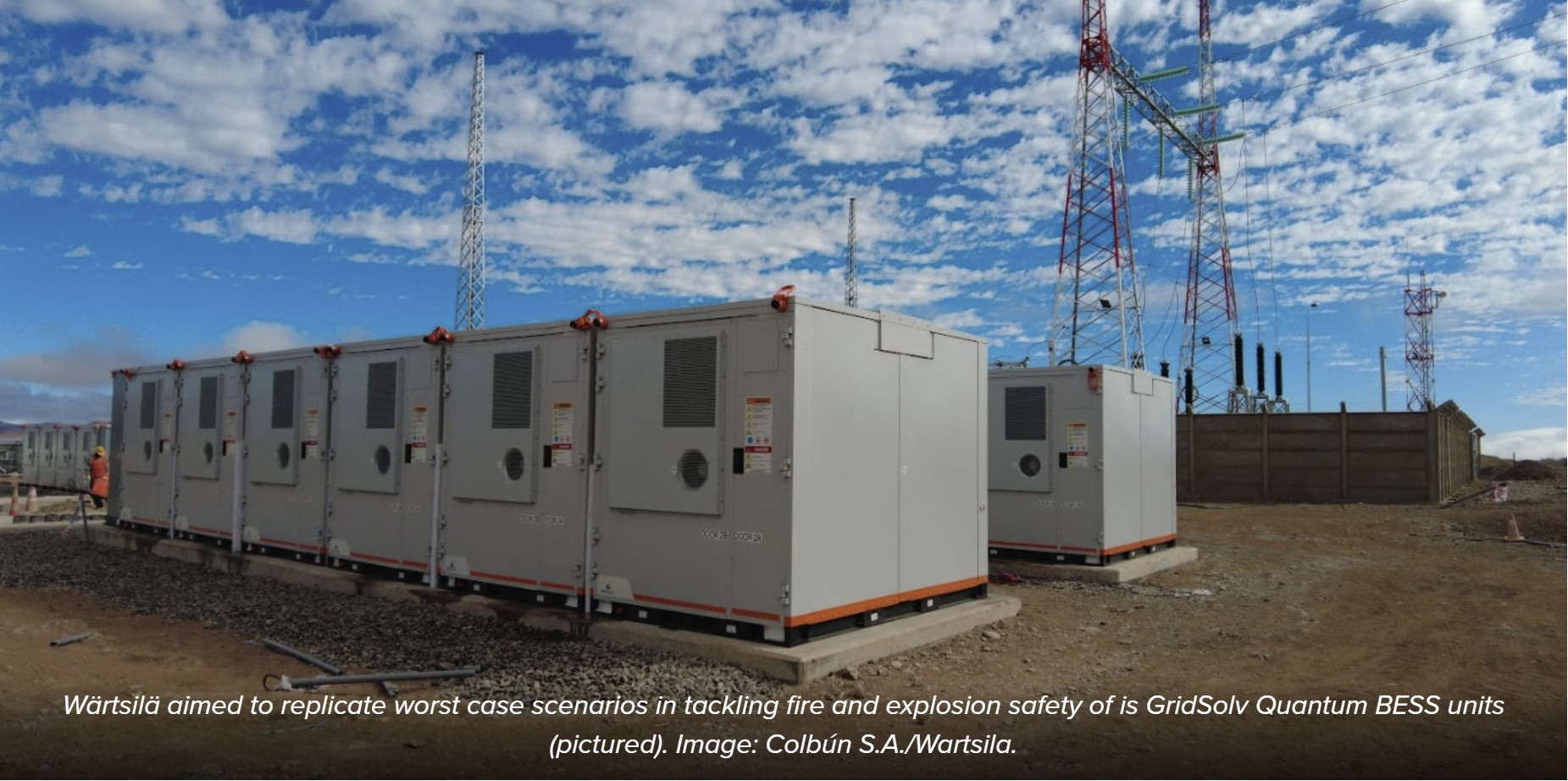
The NFPA 855 standard allows for two different means of protection from explosions. Passive protection involves the use of deflagration panels set on the roof of the BESS unit. These panels open when a certain pressure is reached during a deflagration event, safely relieving the pressure. On the other hand, active protection involves the installation of equipment within the unit that can vent gases before they reach an explosive limit. Wärtsilä’s GridSolv Quantum large-scale BESS product has been tested and certified to meet the requirements of NFPA 69, which defines the standards for active protection.
GridSolv Quantum’s enclosure features a filter fan assembly that draws air through the unit and exhausts it out the other side. Wärtsilä conducted extensive testing using actual battery gas mixture to ensure that the concentration of explosive gases remains below the required 25% limit. Although not mandated by the code, Wärtsilä conducted these tests to validate the design and provide reassurance to customers and AHJs.
The safety concerns raised by local communities regarding the installation of battery projects are taken seriously by the energy storage industry. While fires and explosions are rare at large-scale BESS installations, misconceptions about safety mechanisms can contribute to opposition. To address these concerns, Wärtsilä conducts safety testing beyond the requirements of standards and performs “worst-case scenario” tests. By achieving compliance with NFPA69, Wärtsilä aims to alleviate industry concerns and ensure the safety of stakeholders.
The introduction of active protection measures, such as automatically venting detected gases and allowing AHJs to remotely purge gases from a safe distance, not only enhances the safety of first responders but also provides additional reassurance to AHJs. AHJs prefer active means of protection as they reduce the risk of building up to explosive limits and minimize the potential for injuries during deflagration events.
In conclusion, AHJs are increasingly requiring battery storage projects to have active means of protection against potential explosions. Compliance with standards such as NFPA 855 and NFPA 69 is crucial in meeting these requirements. Wärtsilä Energy has taken proactive measures to ensure the safety of its GridSolv Quantum BESS product and provide peace of mind to customers and AHJs. By going beyond the minimum standards, Wärtsilä aims to address industry concerns and promote the safe development of energy storage systems.