Budapest, Hungary – The Hungarian government has announced a residential energy storage subsidy program with a budget of HUF 100 billion (EUR 261 million), a major initiative to strengthen household energy independence and sustainability. Minister Gergely Gulyás, head of the Prime Minister’s Office, unveiled the policy on Wednesday in Budapest, emphasizing that the program is crucial for ensuring families with solar panels can achieve long-term energy self-sufficiency.
Core Content of the Subsidy Program
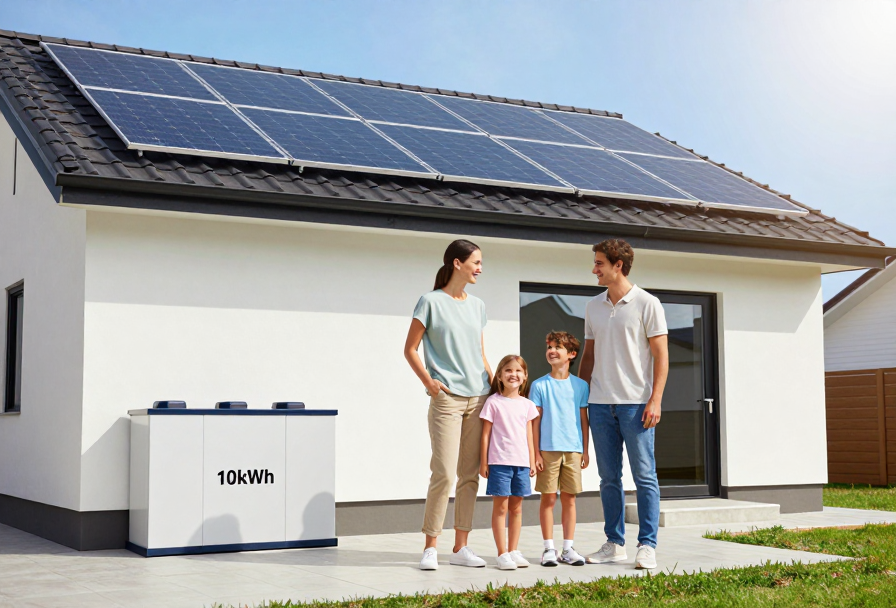
Under this program, any household that has installed or commits to installing solar panels can apply. The government will provide a non-refundable subsidy of HUF 2.5 million (approximately EUR 6,532) for the purchase of a 10-kilowatt-hour energy storage system. Gábor Czepek, Parliamentary State Secretary of the Ministry of Energy, confirmed in a Facebook post that the application window will officially open in early February 2025.
Czepek emphasized: “Self-sufficiency is a key issue not only for the country but also for its people. In terms of electricity, it starts with solar panels and continues with energy storage devices.” He noted that households that have already been excluded from the annual balance settlement system or will be excluded by 2030, as well as residents of small rural settlements with populations under 5,000, will receive priority during the evaluation process.
Application Process and Timeline
Detailed application guidelines will be published by mid-January 2025, and applicants can submit their applications through a user-friendly interface from early February to mid-March. The evaluation process will prioritize households that have already lost or will lose annual settlement benefits, followed by residents of small rural areas.
Czepek revealed in his statement: “In 2026, we will shift into an even higher gear in strengthening our storage capacities, and I will be making further announcements soon.”
Background of Hungary’s Solar Revolution
Hungary has undergone a solar revolution since 2010. At that time, fewer than 300 solar power plants were operating in the country, while today more than 320,000 systems are producing green energy. Czepek emphasized that Hungary is a world leader in the share of electricity produced by solar panels.
According to data from the Hungarian Energy and Public Utility Regulatory Authority (MEKH), by the end of 2024, Hungary’s cumulative solar capacity exceeded 7.5 gigawatts (GW), with approximately 2.67 GW coming from 293,000 household-scale solar systems. In 2024, Hungary added 1.41 GW of new solar capacity, and solar power accounted for 24.8% of the country’s electricity generation, ranking first among EU member states.
Strategic Importance of Energy Storage Systems
Czepek pointed out that while Hungary already possesses enormous solar generation capacity, these capacities can only truly realize their potential when the energy storage issue is resolved. “Solar power plants are humming during the day, but peak consumption occurs in the late afternoon and early evening, thus it is necessary to store electricity for at least a few hours,” he explained.
This energy storage program is part of Hungary’s broader energy strategy. Previously, the Hungarian government has supported energy storage system development through multiple projects, including the 440 MW grid-scale energy storage project announced in April 2024, and the EUR 1.1 billion (approximately HUF 436 billion) large-scale energy storage support scheme approved by the EU in 2023.
Energy Policy Transformation Challenges
Notably, Hungary terminated its traditional net metering policy at the end of 2023, which led to a slowdown in residential solar installation growth in 2024. The net metering policy allowed households to sell excess electricity back to the grid at retail prices and settle annually. The new “gross metering” system requires households to sell surplus power at regulated feed-in prices while paying retail prices for consumption, making energy storage systems more important and economically viable.
Ádám Szolnoki, President of the Hungarian Photovoltaic Industry Association (MANAP), stated that the termination of the net metering policy caused a sharp drop in residential solar installations, but the new energy storage subsidy program is expected to reinvigorate the market.
Long-Term Development Goals
Hungary has set a target of achieving 12 GW of solar capacity by 2030 and plans to reach at least 30% renewable energy in its energy mix. The country has also established a goal of building 1 GW of energy storage capacity by 2030. This HUF 100 billion residential energy storage subsidy program is an important step toward achieving these objectives.
This policy not only helps enhance Hungary’s energy security and household energy independence but also aligns with the EU’s climate goals and green transition strategy. With the widespread adoption of energy storage technology, Hungary is poised to maintain its leading position in Europe’s renewable energy sector.