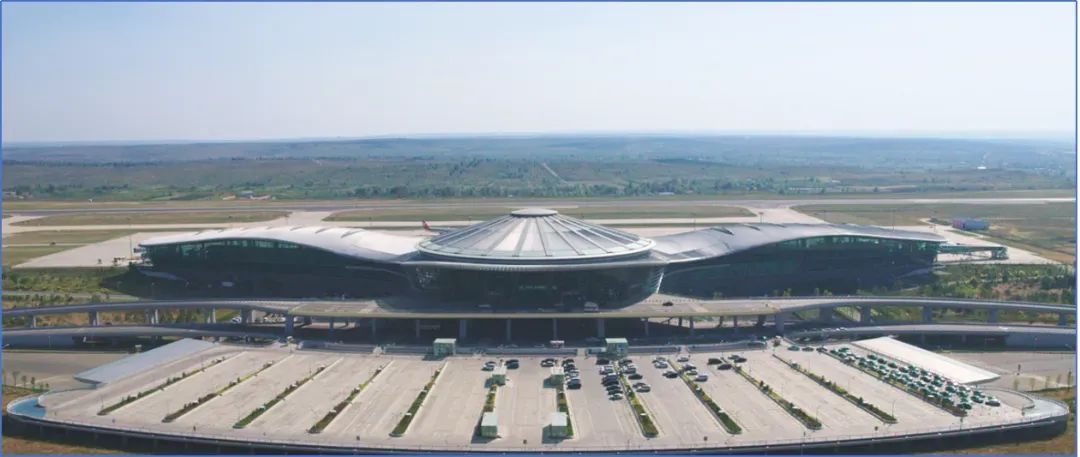
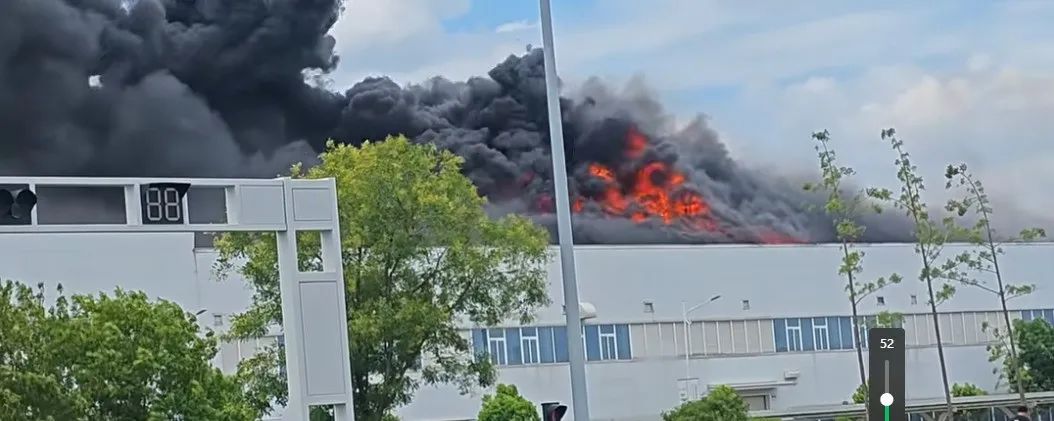
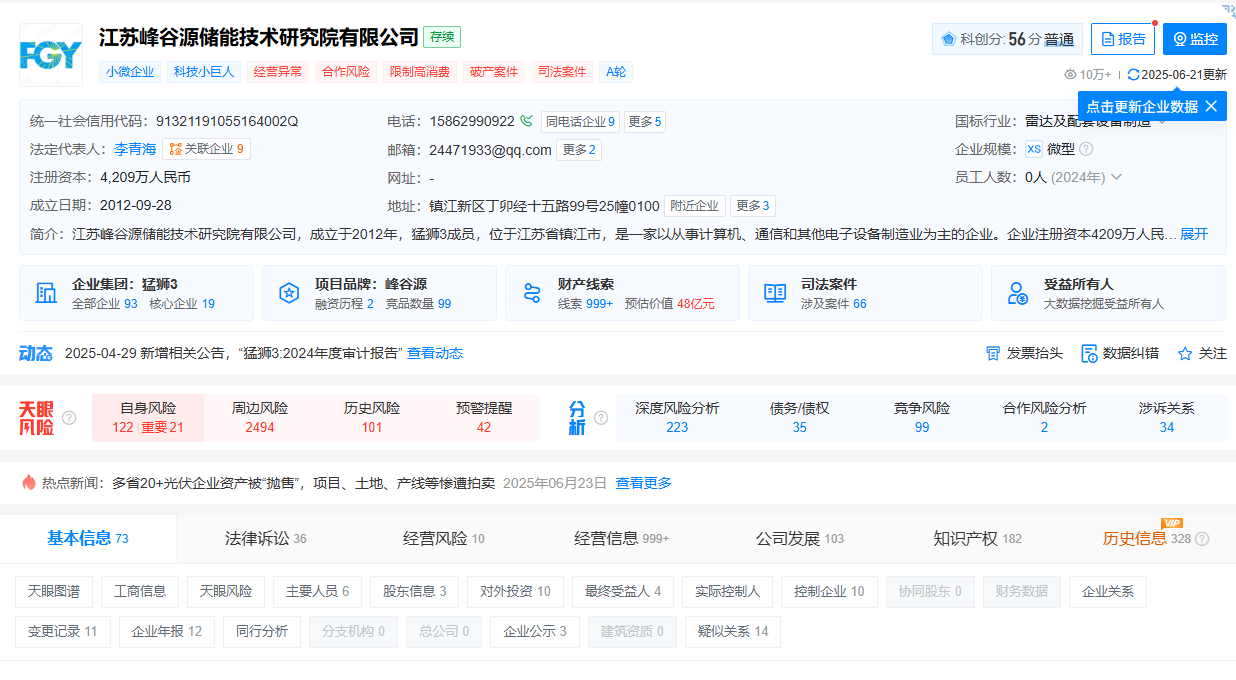
On July 20, 2025, Jiangsu Fengguyuan Energy Storage Technology Research Institute Co., Ltd. is launching another public auction for its 100% stake in Tibet Mengshi Fengguyuan PV Technology Co., Ltd. Once valued at 600 million yuan, the project’s equity has now plunged to a starting bid of 1.051 million yuan, after six failed auctions over nearly two years.
This stunning depreciation offers a sobering glimpse into the financial turbulence of China’s once-booming energy storage sector, and serves as a cautionary tale for overly aggressive investment in capital-heavy clean energy infrastructure.
Once a Storage Star, Now a Liability
Founded in 2017, Tibet Mengshi Fengguyuan was a wholly owned subsidiary of Jiangsu Fengguyuan Energy Storage Technology Research Institute Co., Ltd.—a company known for its integrated energy system solutions, clean power production, microgrid development, and smart energy platform operations.
The parent company was strategically positioned in the domestic energy storage value chain, while its affiliate, Mengshi Technology, was one of China’s early movers in battery production and energy storage project development. Once seen as running alongside industry giants like CATL (Contemporary Amperex Technology Co. Limited), Mengshi eventually fell behind due to aggressive expansion and excessive debt exposure.
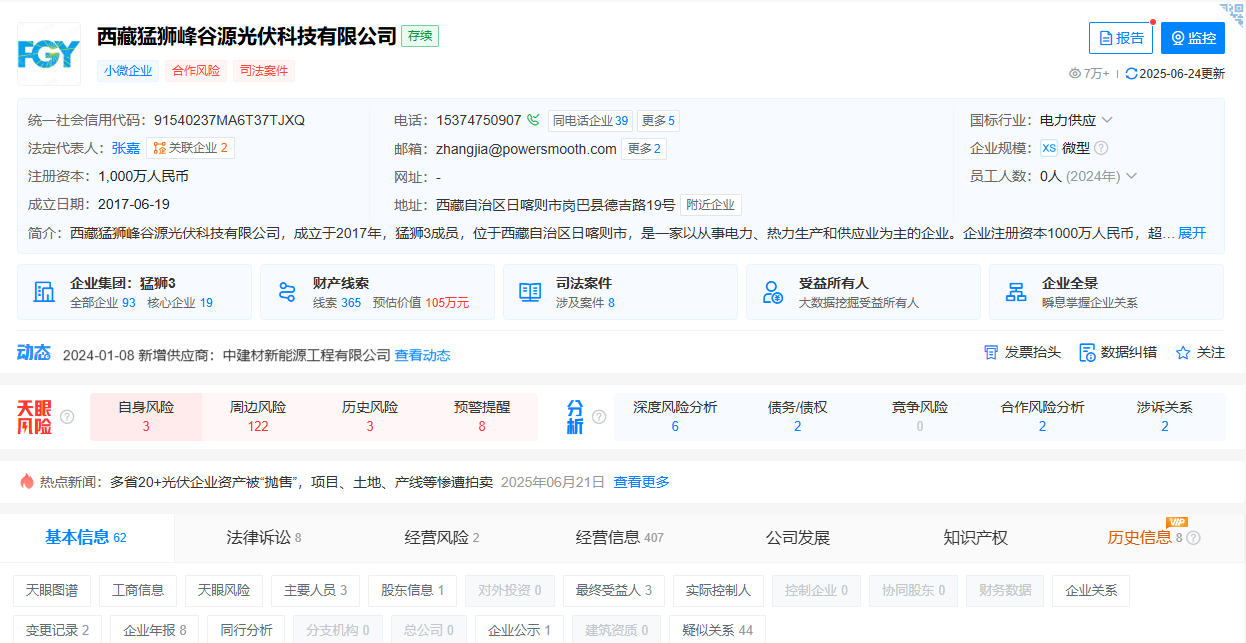
Tibet Mengshi Fengguyuan was behind one of the most technically ambitious projects in the country: a 40MW solar PV installation coupled with a 40MW/193MWh energy storage system in Gangba County, Tibet, sitting at 4,700 meters altitude. Touted as the highest-altitude PV+storage project in the world, it was selected as a pilot demonstration project under Tibet’s first round of PV-storage integration initiatives.
Debt Bomb: Massive Liabilities and No Paid-In Capital
Despite its landmark technical profile, the company’s financial condition is dire.
According to audited data dated January 31, 2023:
- Total assets: ¥627.87 million
- Total liabilities: ¥663.82 million
- Owner’s equity: negative ¥35.95 million
- Paid-in capital: zero yuan, despite a registered capital of ¥10 million
In essence, the company is deeply insolvent, unable to generate enough return to cover even its base-level liabilities.
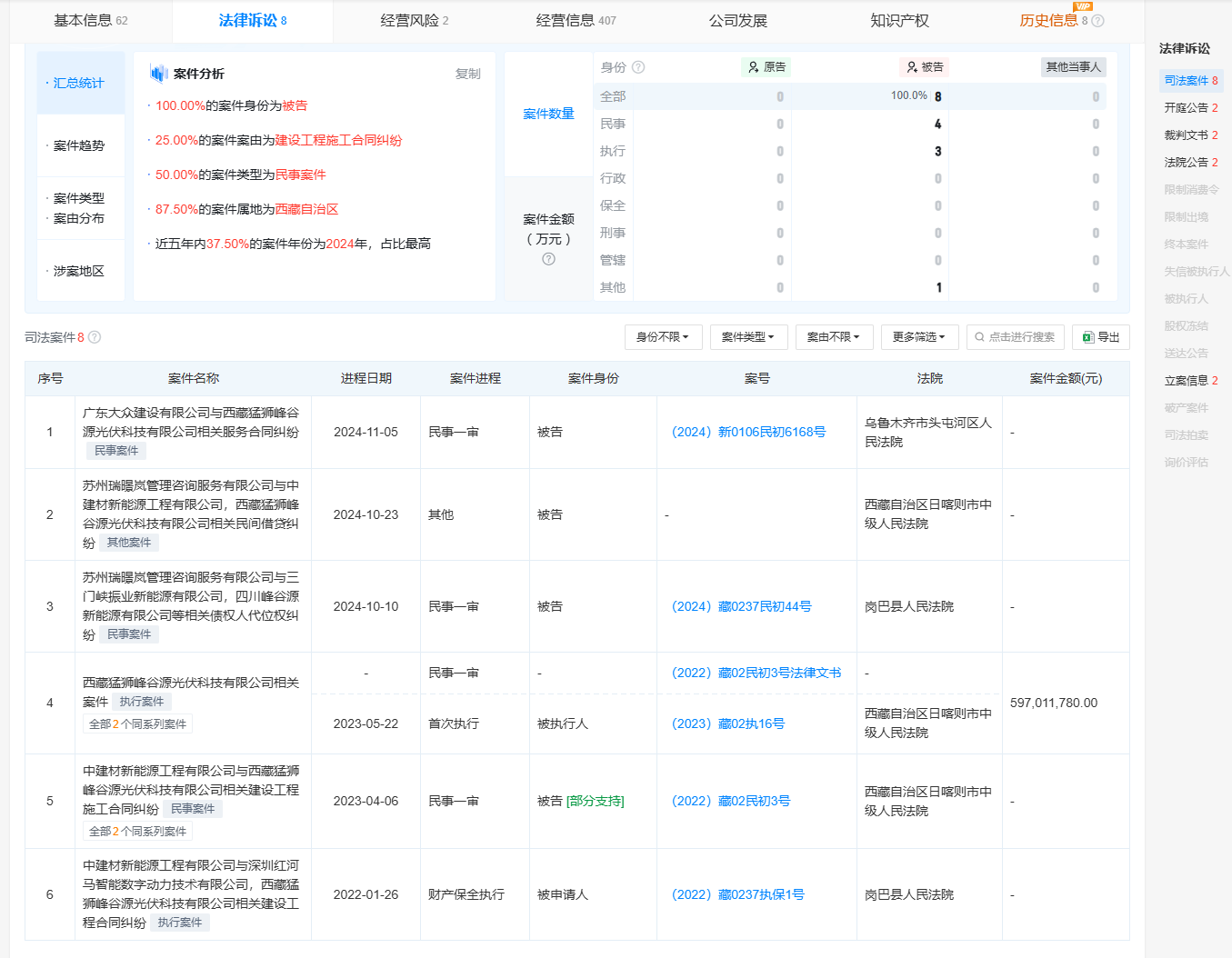
Even more concerning, two civil court rulings from Gangba County People’s Court and Shigatse Intermediate People’s Court confirmed that the company owes over ¥600 million in project and pre-construction payments to third-party contractors. The court rulings include daily penalty interest at 0.05%, which adds roughly ¥110 million per year in penalties alone.
In one high-profile ruling, the Shigatse Intermediate Court affirmed that ¥594 million in engineering payments held priority creditor status, further narrowing the window for potential new investors or equity holders to recover value.
Collateral and More Lawsuits
The company has also mortgaged multiple assets, including:
- Receivables pledged to third parties
- Production equipment
- Raw materials, semi-finished products, and final products
Moreover, two additional lawsuits—still in court—have been filed, with claims of ¥6 million and ¥6.19 million (plus interest), respectively.
Such deep encumbrance essentially renders the equity “financially radioactive,” further discouraging interested buyers—even those seeking to repurpose the assets.
A Rollercoaster Auction History
The first auction for the 100% equity stake was initiated on October 20, 2023, with an initial starting price of ¥600 million. Following multiple failed rounds, the bid fell dramatically: to ¥300 million, then ¥100 million, then ¥1 million—and even once as low as ¥10,000.
On January 5, 2024, with the auction price set at ¥1, the listing attracted 7 bidders and a staggering 433 bids. The auction finally settled at ¥1.051 million, but the transaction was never completed. Now, the same equity is being offered again, with no guarantee of successful transfer.
This listing has effectively become a “hot potato”, bouncing from one failed auction to the next, revealing how infrastructure prestige does not equal financial value.
Industry Reflection: Bubble Deflation and Risk Repricing
Tibet Mengshi Fengguyuan’s fate is emblematic of a broader trend: the cooling of China’s energy storage investment wave.
Between 2020 and 2022, the storage sector saw intense enthusiasm, with projects often fast-tracked based on policy incentives and long-term carbon neutrality targets. But many developers underestimated the risks, especially in:
- Capital-heavy project financing
- Long payback periods
- Grid connection delays and regulatory gaps
- Dependence on government subsidies
Industry analysts now see a turning point where valuation models are being corrected, financial sustainability is replacing speculative hype, and risk management is paramount for energy infrastructure investors.
The Road Ahead: Lessons and Opportunities
While the project’s market value has plummeted, its technical implementation remains a noteworthy achievement. Operating a solar + storage facility at 4,700 meters above sea level involves unique engineering and environmental challenges that have been largely overcome.
However, this does not offset the company’s structural financial failures, including:
- Unpaid capital
- Overleveraged investments
- Lack of repayment ability
- Legal complications
Future energy investors, especially those eyeing strategic equity in renewable and storage projects, must rigorously assess balance sheets, audit risk exposure, and avoid overreliance on early-stage policy incentives.
Conclusion: A Cautionary Tale
The rise and fall of Tibet Mengshi Fengguyuan PV Technology Co., Ltd. is a dramatic story of ambition colliding with financial reality. Its case underscores a key truth in the clean energy transition: technical ambition must be matched by fiscal discipline.
As China continues its path toward net-zero emissions, its clean energy market must navigate the tension between visionary infrastructure and pragmatic investment. This cautionary tale may help the next wave of storage pioneers avoid similar pitfalls—and build a more financially resilient green future.