On June 15, a viral video circulating on Chinese social media platforms showed a Deepal S05 electric SUV engulfed in flames at a Changan 4S service center in Jiangsu Province. The fire originated from the vehicle’s battery pack, located underneath the chassis, while the SUV was lifted on a maintenance platform. Eyewitnesses captured footage of thick smoke and bursts of fire emanating from the underside of the car, as several staff members struggled to extinguish the blaze using handheld fire extinguishers.
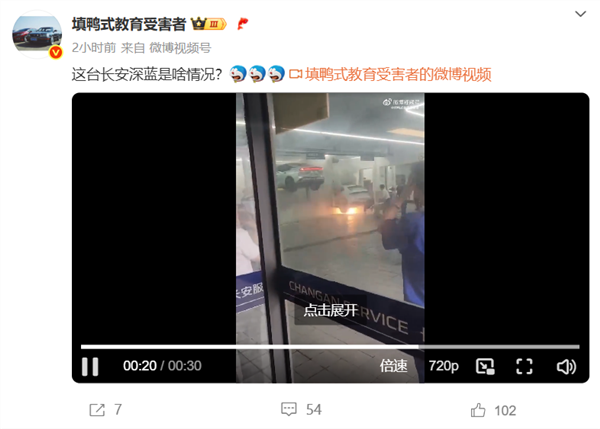
The incident quickly caught the attention of netizens and industry professionals alike, with widespread speculation about whether this was a case of battery quality failure or a safety oversight during repair. Given the increasing popularity of electric vehicles (EVs) and growing consumer concerns regarding battery safety, the event prompted urgent calls for clarity.
Official Response: Human Error, Not Product Fault
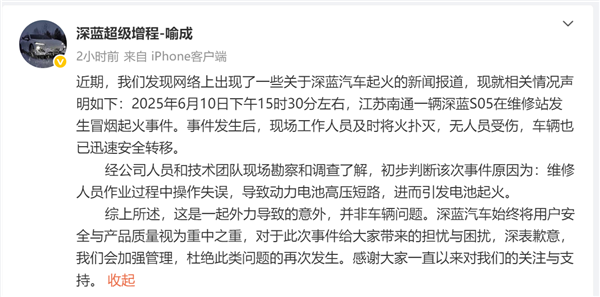
Responding swiftly to the incident, Deepal Auto, a subsidiary of Changan Automobile specializing in new energy vehicles, issued a formal statement on June 15 through its Super Range division head, Yu Cheng, via Weibo. The company confirmed that the fire broke out on June 10 at 3:30 PM in Nantong, Jiangsu Province, during a standard maintenance operation on a Deepal S05 SUV.
Yu emphasized that the situation was quickly brought under control:
“The fire was extinguished promptly by onsite personnel. No injuries occurred, and the vehicle was safely relocated afterward.”
More importantly, after an on-site investigation conducted by Deepal’s technical team, the preliminary cause was identified: a high-voltage short circuit in the battery pack caused by improper handling by maintenance staff. Deepal clarified that this was an external, human-induced accident, not the result of a vehicle defect or system malfunction.
What Is Thermal Runaway in EVs?
This incident highlights the dangers of thermal runaway, a condition where a battery cell’s temperature rapidly increases due to internal or external abuse, often leading to fire or even explosions. In electric vehicles, thermal runaway can be triggered by overcharging, external short circuits, mechanical damage, or exposure to extreme temperatures.
Once initiated, a thermal runaway can propagate from one cell to another, making it extremely difficult to extinguish using standard firefighting methods. This is why the fire extinguishers seen in the viral video had limited effect.
In the Deepal S05 case, the technician’s handling mistake during the repair led to a high-voltage electrical short, which then cascaded into thermal runaway and fire.
Challenges in EV Maintenance Safety
The Deepal incident underscores a larger issue facing the EV industry: the need for specialized training and strict protocols in EV maintenance. Unlike traditional internal combustion engine (ICE) vehicles, EVs involve high-voltage systems, complex battery management systems, and unique fire risks.
At a Changan 4S dealership, which is expected to follow factory standards, such a fire should ideally have been preventable. That it occurred suggests potential gaps in:
- Technician training on high-voltage battery safety
- Standard operating procedures for EV diagnostics and repair
- Emergency response readiness for thermal events in service centers
Public Reaction and Industry Impact
Public reaction online was immediate and mixed. Some users expressed concern over EV fire risks, while others defended the technology and blamed lack of operational discipline at service centers. Comments ranged from “EVs are too dangerous!” to “The problem isn’t the car, it’s the people.”
While Deepal’s rapid clarification helped to protect its brand image, the incident inevitably raised questions about EV repair safety in general. Other automakers are now under pressure to review training procedures, improve repair protocols, and potentially redesign battery systems to be more resilient to user error.
Deepal’s Position and Moving Forward
For Deepal, the incident could have been a reputational setback, especially as the S05 model is a key entry-level SUV in its electric lineup. However, by proactively addressing the cause, and transparently communicating with the public, Deepal appears to have mitigated the fallout.
This incident may also serve as a wake-up call for the EV ecosystem in China, urging a reassessment of how EVs are serviced—not just at the factory, but also on the aftermarket and dealership levels.
Broader Implications for EV Industry
As EV adoption accelerates globally, similar events are likely to become more common unless the industry preemptively upgrades its safety practices. Some possible takeaways include:
- Mandatory high-voltage safety certification for all EV technicians
- Use of thermal sensors and AI-based early warning systems in battery packs
- Deployment of EV-specific fire suppression systems at service centers
- Improved protective design of battery packs to prevent cascading failure
- Clear labeling and handling guidelines for high-voltage components
Conclusion: Human Error is Preventable
The fire incident involving the Deepal S05 serves as a reminder that human error remains one of the most significant risk factors in the EV era. While EVs are engineered with numerous safeguards, these systems can be bypassed or rendered ineffective by negligent or uninformed handling.
As Deepal correctly stated, the problem wasn’t the car, but the process. With better training, stricter protocols, and ongoing oversight, similar incidents can and should be prevented. Ultimately, the road to safer EV adoption doesn’t just depend on better batteries—it depends on smarter handling too.