October 28, 2024 – Volkswagen Group, Germany’s automotive giant, is reportedly preparing significant cost-cutting measures to tackle financial challenges as new rounds of labor negotiations are set to begin. The proposed strategy could include the closure of up to three production plants, downsizing of other facilities, divestment of certain core business areas, and substantial wage cuts for employees. These measures, if implemented, would affect both internal combustion and electric vehicle (EV) production across VW’s German factories.
The outline of Volkswagen’s cost-saving plans was shared by Daniela Cavallo, Chairwoman of the Works Council, in a recent internal announcement distributed to employees. “This is not just sabre-rattling as a tactic in the current round of in-house wage negotiations,” the leaflet stated. “The Management Board really wants all of this and believes there is no alternative.” Cavallo made her statements at an informational event hosted by the Works Council to update employees on the status of upcoming negotiations.
Proposed Closures and Downsizing Across German Facilities
According to Cavallo, Volkswagen’s management intends to implement restructuring measures across its German production sites. The possible plant closures and personnel downsizing will affect all of Volkswagen’s domestic facilities, sparing none entirely. She described the circumstances as serious, with no plant completely “safe” from cuts, adding that the proposed changes reflect the company’s efforts to adapt to challenging market conditions and maintain competitiveness.
While Volkswagen has yet to confirm the specifics of these measures, a company spokesperson told Automobilwoche that “the proposals and plans will first be presented internally to the negotiating partners and then discussed,” acknowledging that the Group is “at a decisive point in its corporate history.” The spokesperson emphasized the weight of responsibility for all stakeholders involved in the negotiations.
EV Production Among the Areas Impacted
The anticipated plant closures mark a strategic shift for Volkswagen as it grapples with its ambitious electric mobility goals. A recent internal analysis showed that the German market alone would not generate sufficient demand to sustain all its production facilities, with an estimated 500,000 annual vehicle sales not enough to maintain full operational capacity across its plants. In September, Volkswagen Chief Financial Officer Arno Antlitz explained that meeting production demand levels might only support two fully operational plants, which places other facilities at risk.
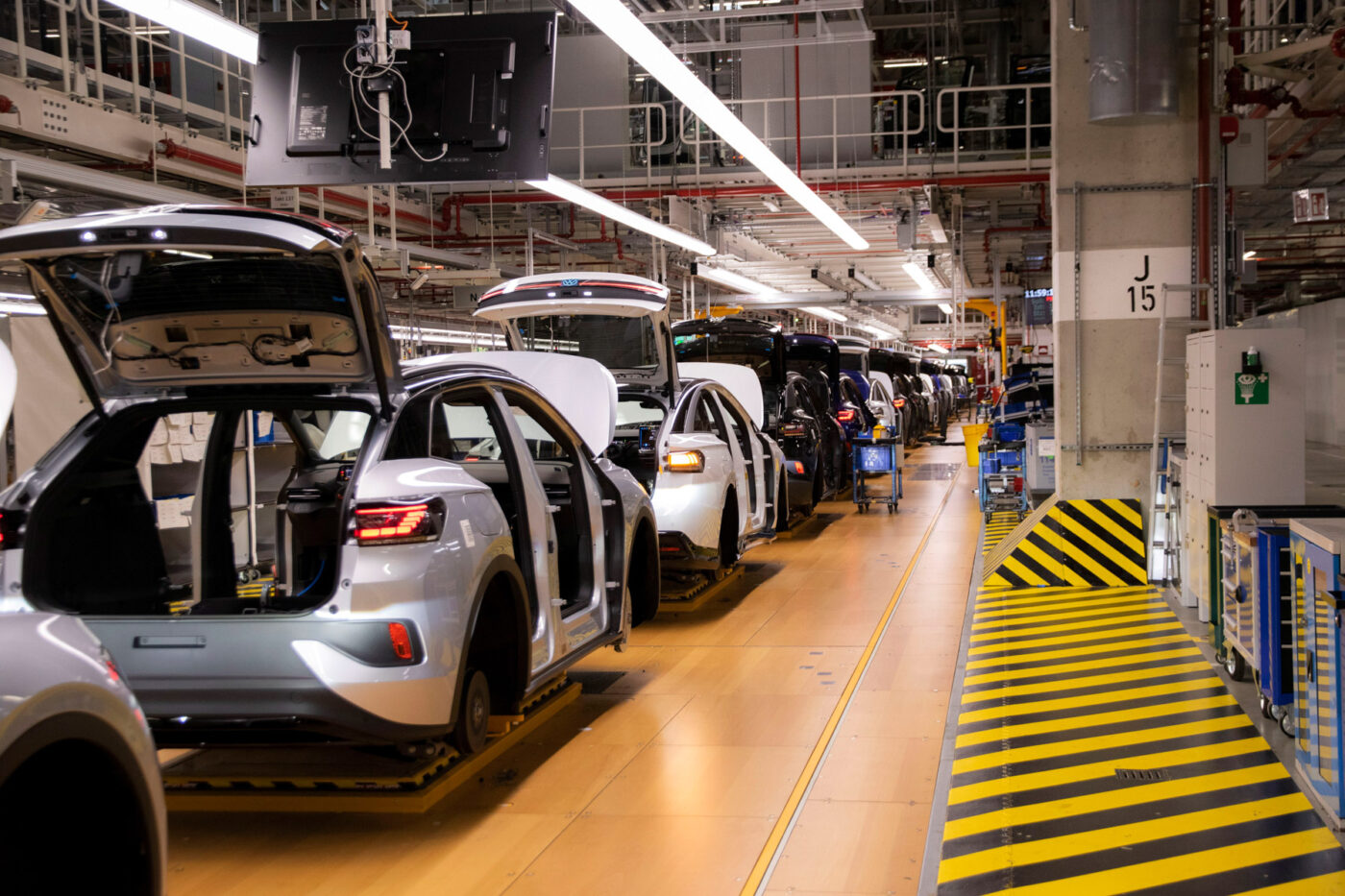
Until now, speculation around plant closures largely focused on smaller operations, such as the Transparent Factory in Dresden and the former Karmann plant in Osnabrück, where production commitments expire in 2026. However, if closures expand to three facilities, a larger production site could be considered. While Volkswagen’s main plant in Wolfsburg, the company’s historic home base, is unlikely to be closed, some plants dedicated to EV manufacturing could be affected. For now, facilities like Emden (where ID.4 and ID.7 models are produced), VWN in Hanover (ID. Buzz), and Zwickau (ID.3, ID.4, ID.5, Cupra Born, and Audi Q4 e-tron) are expected to remain operational. Components for EVs, manufactured in plants in Braunschweig, Salzgitter, Kassel, and Chemnitz, are also anticipated to be maintained.
Impact on Jobs and Employee Compensation
Cavallo and the Works Council warned that the restructuring proposals could extend beyond production sites, potentially impacting other sectors of VW’s German workforce. The company’s management has reportedly explored plans to “relocate entire departments and areas abroad or outsource them,” affecting both semi-skilled and academically qualified employees. Those employees who keep their positions within Germany could still face pay reductions of around 20 percent, according to employee representatives. Earlier reports from Handelsblatt indicated that wage cuts of approximately 10 percent were initially discussed, with additional cuts to bonuses for top-tier earners, “Tarif Plus” bonus pay scales, and anniversary bonuses. The proposals, reportedly circulated internally under a “poison list” label, also include a two-year wage freeze for 2025 and 2026.
The ‘Week of Truth’ for Volkswagen Group
This week has been described as a “week of truth” for Volkswagen. On Wednesday, the company will release its third-quarter financial results, which are expected to reflect financial pressures after issuing a profit warning earlier in the month. On the same day, a new round of collective bargaining will commence with IG Metall, one of the most influential trade unions in Germany. While VW’s management is focused on preparing a list of potential factory closures, IG Metall representatives are advocating for a 7 percent wage increase for workers and improved compensation for apprentices.
Amid the upcoming negotiations, Handelsblatt warns that swift resolutions are unlikely, as the two sides remain divided over the proposed austerity measures and compensation demands. The labor union stands firm in its insistence on fair compensation, while VW’s management is equally resolute in pursuing necessary structural reforms.
Volkswagen’s Position and Future Outlook
Volkswagen’s restructuring plans underscore the company’s efforts to navigate a rapidly evolving automotive market. The proposed cost-cutting measures and plant closures reflect a need for the company to adapt to the global shift toward EV production and digital innovation. The strategic changes come amid intense competition from global EV producers, requiring VW to optimize resources while maintaining its long-standing commitment to German manufacturing.
While the Board of Management is committed to restructuring, the decision to downsize operations or outsource production remains subject to intense debate within the company. For Volkswagen, this period marks a turning point that will likely redefine its market positioning in Germany and globally. With both internal negotiations and market pressures at play, the coming months will be crucial for the company as it balances operational demands with employee expectations.