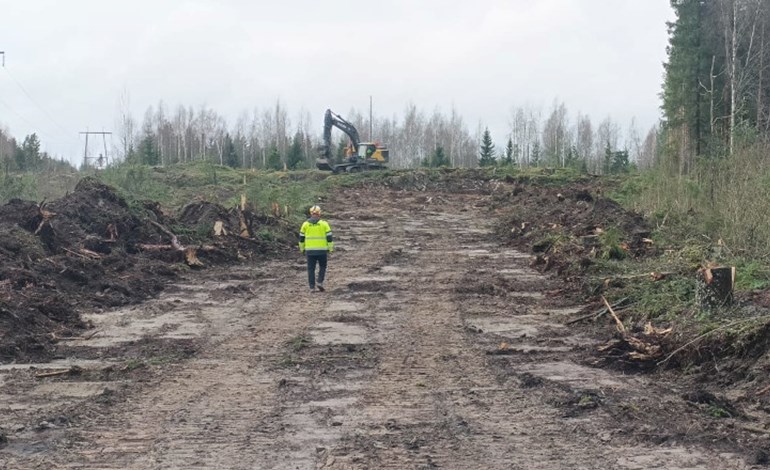
Octopus Australia, the Australian subsidiary of the UK-based Octopus Group, has announced the financial close of its Blind Creek solar-plus-storage project in New South Wales. The project, valued at approximately AUD 900 million (USD 588 million), has officially entered the construction phase. This marks the company’s second major energy project to reach financial close and commence construction this year.

Project Technical Specifications and Innovation
The Blind Creek project is located in the Bungendore region of New South Wales, 275 kilometers southwest of Sydney and 32 kilometers northeast of Canberra. The project will develop a 300-megawatt solar generation facility paired with a 243MW/486MWh battery energy storage system. The project covers an area exceeding 700 hectares.
The project employs advanced DC-coupled hybrid technology, representing the market-leading configuration approach. Through this technology, solar generation flows directly to the battery through a DC/DC converter, minimizing conversion losses and grid connection costs. This configuration allows solar energy generated during the day to be stored in batteries when energy prices are low and dispatched during evening peak demand periods, providing more stable and reliable clean power supply.
Strong Investor Consortium
The project has secured support from multiple institutional investors, including Australian superannuation funds Hostplus and Rest Super, the Clean Energy Finance Corporation (CEFC), Westpac Private Bank, and global infrastructure investment leader APG. This investor consortium demonstrates strong market confidence in Octopus Australia’s energy strategy.
Sonia Teitel, Octopus Australia Co-Managing Director of Renewables, stated: “Reaching financial close on Blind Creek marks a major milestone for Octopus Australia and our commitment to accelerating the clean energy transition. This achievement demonstrates the strength of our strategy to deliver renewable energy projects that provide long-term value for communities and investors alike.”
Monique Miller, CEFC Chief Investment Officer for Renewables and Sustainable Finance, commented: “The start of construction at Blind Creek marks a major milestone in Australia’s clean energy transition. This is a powerful example of how global capital and Australian innovation can work together to deliver renewable energy at scale.”
Agri-Solar Model
A distinctive feature of the Blind Creek project is its genuine agri-solar operational model. Developed in close partnership with local landholders, the project is specifically designed to enable sheep grazing to continue beneath and around the solar panels while enhancing land productivity with solar infrastructure. This model achieves an organic integration of renewable energy production with regenerative agriculture.
The project was originally founded by a team of local farmers and renewable energy experts, whose vision was to realize their land’s potential to host a farmer-led, utility-scale solar and battery project, co-locating renewable energy with agricultural production.
Community Contributions and Employment Opportunities
The project is expected to create up to 300 full-time jobs during peak construction, with approximately 5 full-time positions during operation.
More uniquely, the project has established a Community Benefit Sharing Scheme (CBSS). One of the founders’ visions was to ensure that neighbors impacted by the project benefit financially from it. The scheme will contribute AUD 330 per MW per year to the local community, with funding directed toward: supporting the Queanbeyan-Palerang Regional Council through a Voluntary Planning Agreement for the new Bungendore swimming pool and other facilities within the planned Bungendore sports precinct; supporting neighbors impacted by the project, ranging from near neighbors to those on the other side of Lake George, some 7 kilometers away; establishing an Indigenous Cultural and Heritage learning zone near the shore of Lake George to allow Indigenous Elders to educate Indigenous communities and the local population.
Power Supply Capacity and Environmental Benefits
Once operational, the project is expected to provide 24-hour clean electricity to over 120,000 homes. The project will generate approximately 735,000 MWh annually, with environmental benefits equivalent to removing 200,000 cars from the road. The two-hour battery storage system will store energy for use during peak demand periods, ensuring more clean power is available during evening consumption peaks.
Grid Connection and Business Model
The project connects to the existing 330kV high-voltage transmission network, positioned in a strong grid area between the major load centers of Sydney and Canberra. This strategic location enables the project to effectively deliver power to New South Wales’ primary consumption regions.
The project has also secured a first-of-its-kind four-hour firmed power purchase agreement (PPA), providing energy customers with stable and reliable power supply similar to what traditional coal and gas generation can provide. This “stacking” strategy is a key component of Octopus Australia’s success.
Construction Partners
Octopus Australia continues its collaboration with GRS as EPC Contractor and Wärtsilä as the battery energy storage system (BESS) supplier to deliver the DC-coupled solar hybrid project.
Industry Significance
The Blind Creek project is one of the largest of its kind in the Australian National Electricity Market, combining a solar farm and battery energy storage system to deliver more clean power during evening hours when demand is highest. The successful financial close demonstrates that solar-plus-storage hybrid projects have become highly bankable in the Australian market.
This milestone follows the commencement of construction in April at Octopus Australia’s Fulham solar and battery project in Gippsland, Victoria. Fulham was one of the first and largest in the current wave of DC-coupled solar batteries, reaching financial close in the first quarter of 2025.
Sam Reynolds, Octopus Australia Chief Executive, stated that the company’s “stacking” strategy is a significant part of its success, effectively integrating renewable energy assets into one portfolio to provide energy customers with firm, reliable power purchase agreements.