San Jose, Calif., and Reno, Nev., October 15, 2024 – Lyten, a global leader in Lithium-Sulfur battery technology, has revealed its plan to build the world’s first Lithium-Sulfur battery gigafactory. The facility, located near Reno, Nevada, will produce up to 10 GWh of batteries annually at full capacity and represents a significant leap in battery technology, with a total investment of more than $1 billion.
The Nevada gigafactory will be located on a 125-acre campus in the Reno AirLogistics Park. Once fully operational, it will employ over 1,000 workers, including researchers, engineers, technicians, and administrative personnel. Initially, 200 jobs will be created, with the workforce expanding as the factory scales up its operations. Phase 1 of the facility is scheduled to come online in 2027.
Lyten has signed a Memorandum of Understanding (MOU) with Dermody Properties to locate the facility on land owned by the Reno-Tahoe Airport Authority, marking a critical step in Nevada’s emergence as a key hub for U.S. battery manufacturing.
Lithium-Sulfur Battery Technology: A Breakthrough
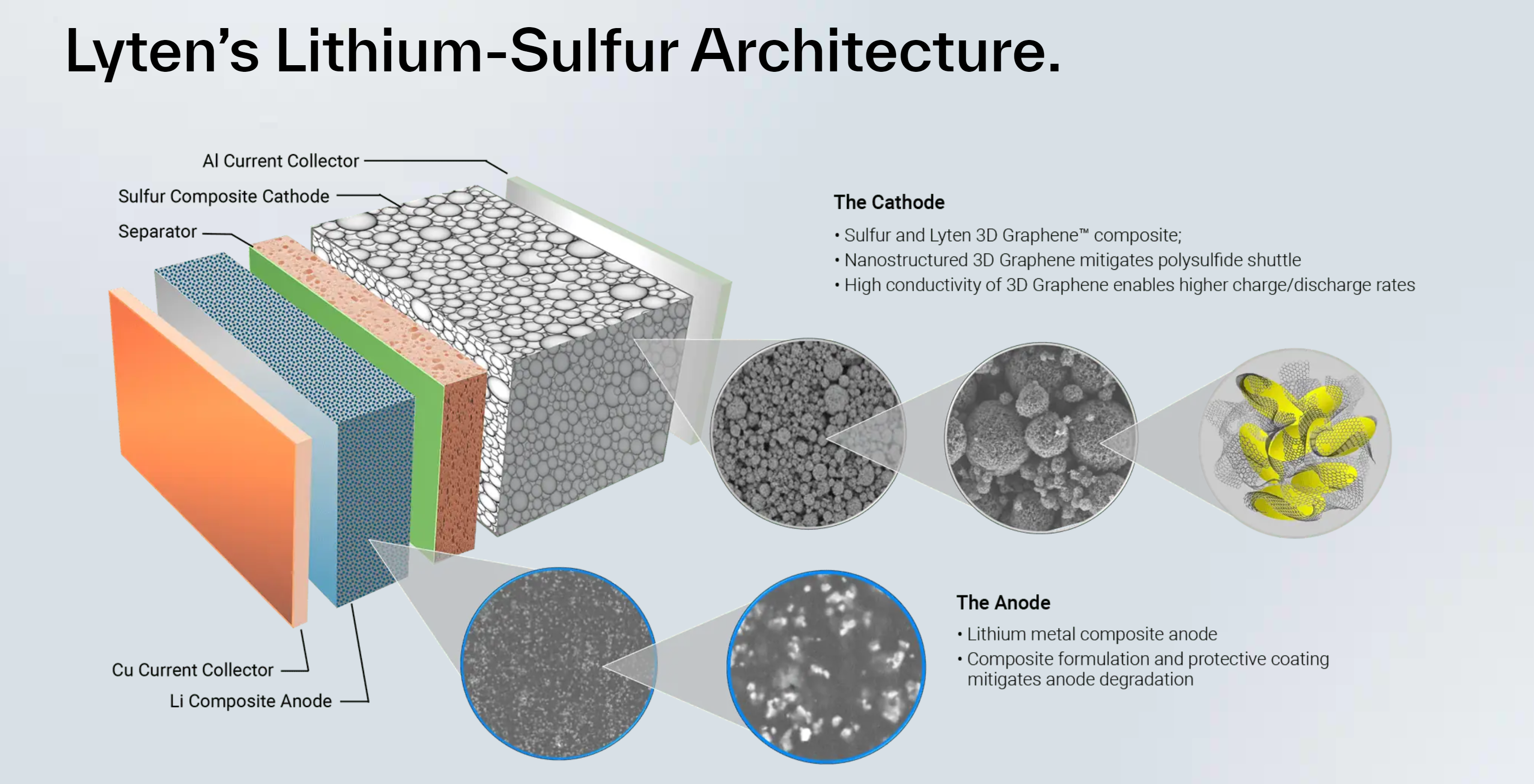
Lyten’s Lithium-Sulfur technology offers significant advantages over traditional lithium-ion batteries, including higher energy density and the use of abundantly available local materials. These batteries are up to 40% lighter than lithium-ion batteries and 60% lighter than lithium iron phosphate (LFP) batteries. Unlike conventional batteries, Lyten’s Lithium-Sulfur cells do not require nickel, cobalt, manganese, or graphite, reducing the reliance on costly and environmentally harmful mined materials.
The use of locally sourced, low-cost materials also enables Lyten to offer a more affordable battery solution at scale. This development is especially important as the demand for energy storage systems continues to rise across various sectors, including micromobility, aerospace, drone technology, and defense.
Partnerships and Economic Impact
Nevada’s Governor, Joe Lombardo, welcomed the investment, stating that Nevada is fast becoming a leader in the battery manufacturing industry. “Nevada is emerging as a key hub for U.S. battery manufacturing, and Lyten’s choice to build the world’s first lithium-sulfur battery gigafactory here underscores the strategic advantages our state offers to leading tech companies,” Lombardo said. The new facility is expected to contribute to the state’s economic growth, creating high-paying jobs and strengthening Nevada’s clean energy ecosystem.
Lyten’s decision to build in Nevada also highlights the state’s strong infrastructure, skilled workforce, and commitment to sustainable growth. Lyten is working closely with local educational institutions, including the University of Nevada-Reno (UNR) and Truckee Meadows Community College, to develop the workforce needed to scale its operations. The company has also engaged with Nevada’s Native American and Tribal communities to ensure that local talent is fostered and supported.
A Strategic Location for Clean Energy
The Reno-Tahoe area, with its vast expanses of developable land and proximity to critical supply chains, has become a prime location for technology-focused advanced manufacturing. According to Daren Griffin, President and CEO of the Reno-Tahoe Airport Authority, the Lyten facility is an ideal addition to the region’s expanding tech ecosystem. “Projects like Lyten’s proposed facility are a great use of the Reno AirLogistics Park space at Stead and further solidify our area as a Tech Hub,” Griffin said.
In addition to its strategic location, Lyten’s lithium-sulfur gigafactory will support U.S. clean energy initiatives, as the batteries produced at the facility will be fully compliant with the Inflation Reduction Act and the National Defense Appropriations Act (NDAA). This ensures that the batteries are not subject to Section 301 tariffs, providing Lyten with a competitive advantage in the marketplace.
Looking Ahead
Lyten is poised to revolutionize the battery industry with its Lithium-Sulfur technology, and the Nevada gigafactory is a critical component of this vision. The company has already been manufacturing cathode active materials (CAM) and lithium metal anodes at its semi-automated pilot facility in San Jose, California, and the Nevada factory will scale up production to meet growing demand.
By 2025, Lyten expects to have its Lithium-Sulfur batteries in use across various industries, including micromobility, space, drone, and defense sectors. With a pipeline of hundreds of potential customers, the company is well-positioned to lead the transition toward a more sustainable and energy-efficient future.
The Nevada gigafactory, once completed, will not only enhance the U.S. battery supply chain but also contribute significantly to the nation’s clean energy goals. As Lyten continues to expand its operations and partnerships, the company is set to become a cornerstone of Nevada’s clean energy economy and a key player in the global shift toward electrification.