Seoul, South Korea – A surge in demand for energy storage systems (ESS) coupled with escalating trade tensions between the United States and China is creating a golden opportunity for Korean battery manufacturers to significantly expand their presence in the lucrative US market. Korean companies, notably LG Energy Solution and Samsung SDI, are strategically positioned to capitalize on this shift, potentially eclipsing the dominance previously held by Chinese competitors.
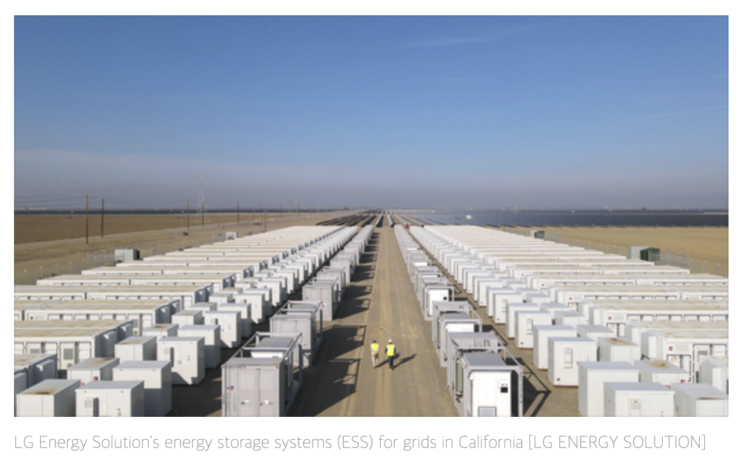
The burgeoning ESS market is being fueled by several factors, most notably the proliferation of AI-driven data centers and the rapid expansion of renewable energy projects, including solar and wind power, particularly across North America. However, China’s longstanding position as the dominant player in the ESS market is now facing significant headwinds due to the 45% tariff imposed by the Trump administration on Chinese batteries and related components. This tariff has dramatically reduced the price competitiveness of Chinese-made ESS solutions in the US, opening the door for Korean manufacturers to seize market share.
LG Energy Solution, South Korea’s largest battery manufacturer, is leading the charge. The company has been aggressively pursuing and securing major ESS contracts, demonstrating its commitment to the US market. Just this week, LG Energy Solution inked a significant deal with Taiwan-based Delta Electronics, a contract estimated to be worth up to 1 trillion won (approximately $682 million). This agreement involves the supply of roughly 4 gigawatt-hours of residential ESS batteries over a five-year period, enough electricity to power 400,000 households for a single day.
The momentum doesn’t stop there. Just prior to the Delta Electronics deal, LG Energy Solution announced a partnership with PGE Polska Grupa Energetyczna, Poland’s largest state-run energy company, to supply almost 1 gigawatt-hour of grid-scale ESS batteries between 2026 and 2027. Furthermore, last year saw LG Energy Solution secure two substantial contracts: a potential 2 trillion won deal with Minnesota-based Excel Energy Capital and another 2 trillion won agreement with New York’s Terra-Gen. These deals underscore the company’s ambition and the growing demand for Korean-made ESS solutions in the US.
Historically, Korea held a significant share of the US ESS market, exceeding 70%. However, this share was gradually eroded as Chinese manufacturers, like Contemporary Amperex Technology (CATL) and BYD, gained traction by offering lower-priced lithium iron phosphate (LFP) batteries. While Korean companies initially focused on premium nickel cobalt manganese (NCM) batteries primarily for electric vehicle (EV) applications, the rise of LFP technology and aggressive pricing strategies from Chinese competitors created a competitive challenge.
Now, the tables are turning. The imposition of battery tariffs has significantly impacted the cost-effectiveness of Chinese LFP batteries in the US market. Han Byeong-hwa, an analyst at Eugene Investment & Securities, notes that the 45% tariff has effectively leveled the playing field, allowing Korean manufacturers to regain lost ground. “China’s 80% share of the US ESS market will be largely eaten by Korean battery makers, who have also secured local production of LFP batteries,” he predicts.
LG Energy Solution is actively investing in LFP battery production to meet the growing demand. The company currently operates an LFP battery plant specifically for ESS applications in Holland, Michigan, slated to begin production in the second half of this year. A plant in Arizona is also under construction, although production timelines are being adjusted to balance supply and demand. LG Energy Solution CEO Kim Dong-myung has pledged to quintuple the company’s ESS battery sales by 2028, a clear indication of the strategic importance of the US market.
Samsung SDI is also strategically positioning itself to capitalize on the opportunity. In July, the company sealed a deal with Florida-based energy company NextEra Energy to supply ESS batteries, reportedly up to 6.3 gigawatt-hours and potentially worth 1 trillion won ($730 million). While Samsung SDI currently focuses on pricier NCM-based ESS batteries produced at its plants in Ulshan and China, the company is actively expanding its LFP battery production capabilities. A dedicated LFP battery production line is currently under construction in Ulshan, and Samsung SDI is also exploring the possibility of establishing a manufacturing facility in North America.
During a conference call in January, Park Jong-sun, executive vice president of Samsung SDI’s strategic planning team, expressed confidence in the company’s ability to meet the growing demand for ESS solutions in the US. “We are committed to providing innovative and reliable energy storage solutions to our customers in the US market,” he stated. “Our investments in LFP battery technology and our strategic partnerships will enable us to meet the evolving needs of the market.”
The shift in the US ESS market presents a significant opportunity for Korean battery manufacturers to solidify their position as global leaders in the energy storage sector. With continued investment in LFP battery technology, strategic partnerships, and a focus on meeting the evolving needs of the US market, Korean companies are poised to dominate the landscape for years to come.