Industry Dilemma: When “Price Wars” Hit a Ceiling
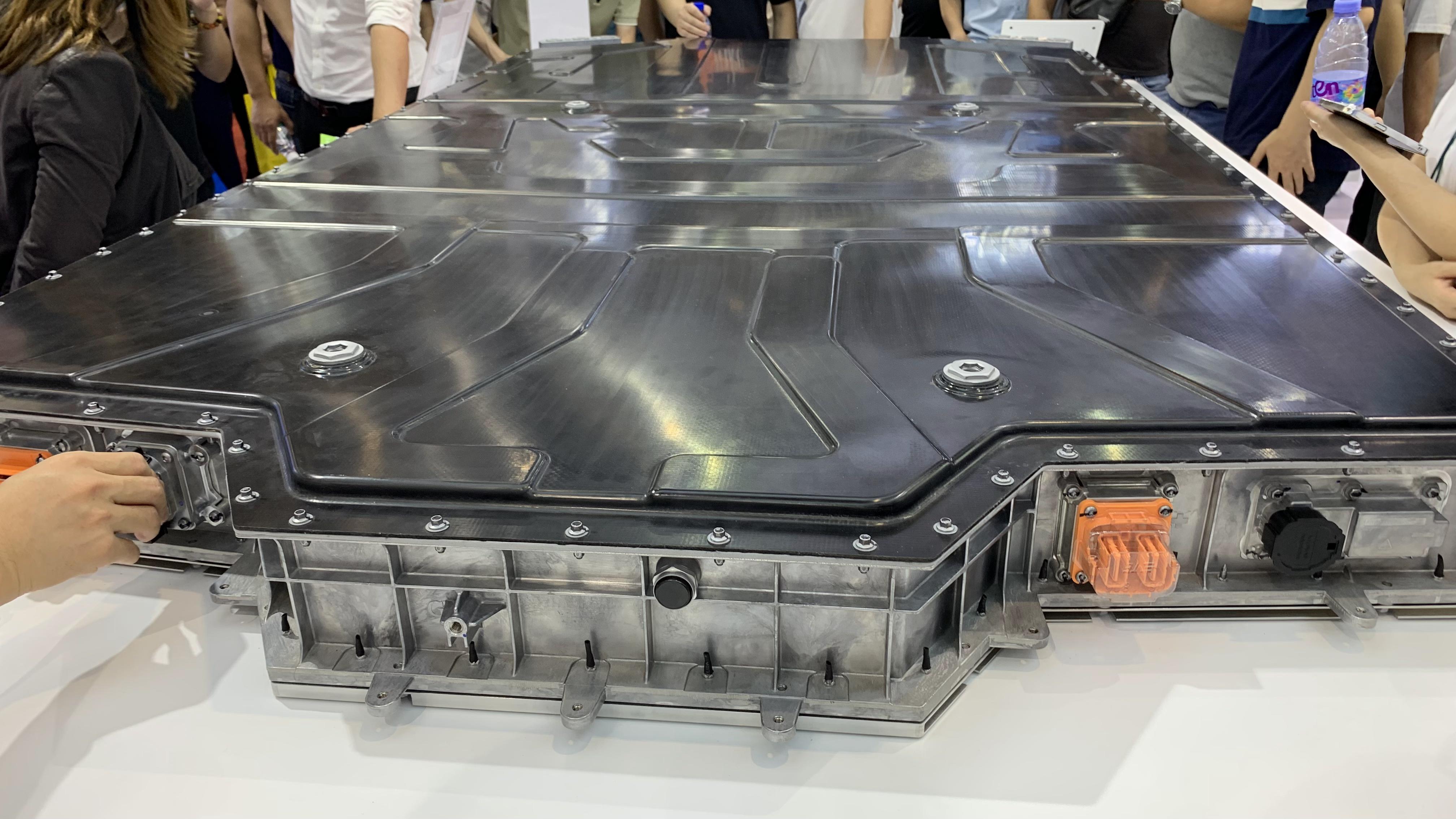
Facing the strategic deployment of the “15th Five-Year Plan,” China’s new energy industry is accelerating its global reach. However, beneath the booming surface, the energy storage sector is mired in low-price competition.
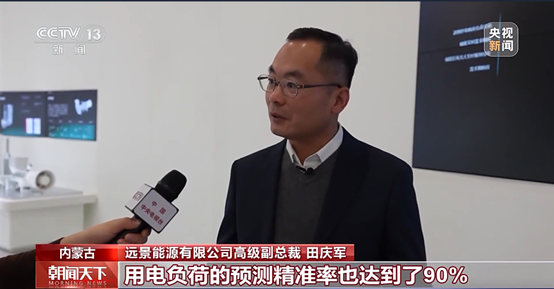
Tian Qingjun, Senior Vice President of Envision, recently pointed out in a CCTV interview that the root cause lies in product homogeneity, immature business models, and temporary overcapacity.
Simply competing on price not only suppresses investment returns but also stifles innovation. The industry urgently needs a profound transformation from “price competition” to “value creation.”
Tian noted that AI technology will be the core driver of this transformation, leading Chinese new energy enterprises out of the primary stage of merely selling equipment.
AI Reconstructs Value: From “Accessory” to “Smart Trader”
Traditional energy storage is often viewed merely as a passive “power bank” for wind and solar. The deep application of AI technology is fundamentally reconstructing this value logic.
In mature electricity markets, AI acts as a super “Smart Trader.” It predicts price fluctuations with precision to automate charging and discharging, significantly boosting revenue.
In regions with weak power grids, AI empowers storage with robust “grid-forming capabilities.” It breaks the limitation of passive regulation, actively supporting grid stability and inertia.
This shift allows energy storage to break through the investment ceiling caused by hardware costs, creating massive market growth by generating additional revenue through power trading and ancillary services.
Scenario is King: AI Solutions Become the Global “Ace”
As the global power system accelerates toward clean energy and marketization, customer needs have changed. Overseas owners no longer focus solely on equipment specs; they care about profitability amidst volatility.
Tian emphasized that the core competitiveness of Chinese enterprises going global is upgrading. The focus has shifted from exporting single hardware devices to exporting complete “AI scenario-based solutions.”
The UK, with one of the world’s most complex electricity market mechanisms, serves as a bellwether. In November 2025, the world’s first energy storage solution based on an “AI Energy Large Model” landed there.
This project not only adapted to the high-frequency fluctuations of the UK grid but also demonstrated astonishing revenue stability in complex power trading markets.
This marks a new stage for Chinese technology exports—intelligent and scenario-driven— where “smart systems” replace “simple manufacturing” as the key to capturing high-end markets.
Deep Integration: From “Going Out” to “Blending In”
True globalization is about more than just selling products abroad. Tian Qingjun repeatedly emphasized a core philosophy: shifting from “going out” to “blending in.”
This means enterprises must deeply integrate with the target market’s culture, laws, and industrial ecosystem. It requires providing customized local solutions to address specific grid pain points.
In developing regions with weak infrastructure, AI storage helps optimize local grid architecture. In developed countries with strict environmental rules, AI drives breakthroughs in noise control and eco-friendliness.
This strategy of “value symbiosis” through deep globalization has won trust for Chinese firms. Envision has successfully broken into ten strategic markets, including Australia, Chile, Italy, and Poland.
Real-World Benchmark: 12.8GWh World’s Largest Storage Cluster
This strategy is not just theoretical; it is supported by solid, massive-scale implementation. On December 31, 2025, a blockbuster announcement shook the industry from Inner Mongolia.
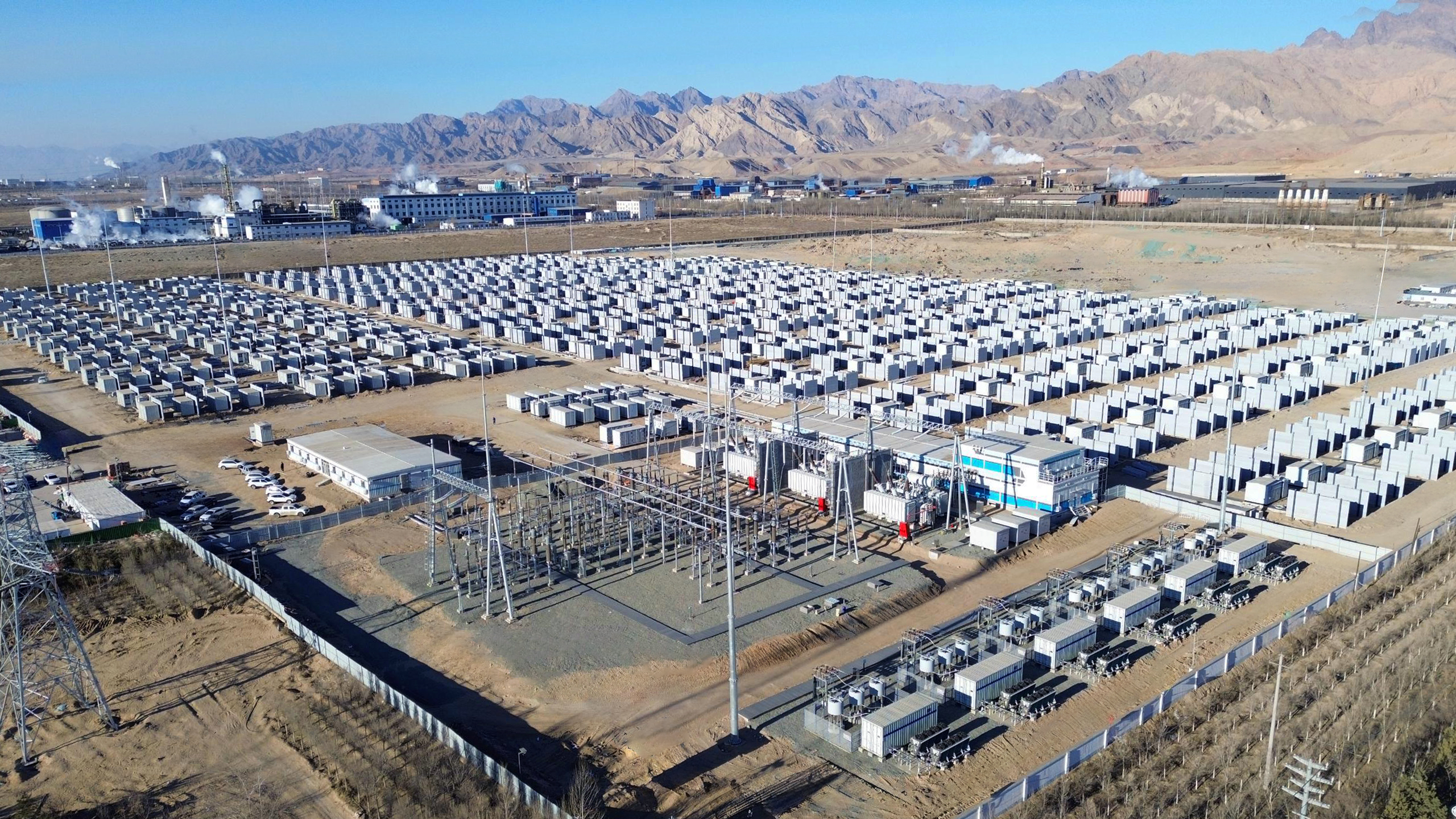
The world’s largest energy storage cluster project—the Envision Jingyi Chagan Hada project—was successfully connected to the grid. With a capacity of 12.8GWh, the project is fully equipped with Envision’s AI energy storage systems.
It not only passed the grid’s rigorous “three-charge, three-discharge” test in one go but will also fully connect to the electricity spot market, directly participating in trading arbitrage.
This milestone project validates the maturity of AI in large-scale commercial applications and provides a replicable “Chinese Model” for the large-scale consumption of renewable energy globally.
Conclusion
From the deployment of AI large models in the UK to the grid connection of the multi-billion project in Inner Mongolia, Chinese new energy enterprises are rewriting the global energy map with technological prowess.
Bidding farewell to inefficient price involution and embracing the value leap brought by AI is not only the path to survival for enterprises but also the only way for China to become a global energy powerhouse.