On November 7, 2024, AITO, a prominent electric vehicle (EV) manufacturer, responded to ongoing controversy surrounding an accident involving its M7 model in Guangzhou. The incident, which took place on July 6, 2024, has raised questions about the vehicle’s safety features, specifically its braking system, following a customer’s claim of a sudden malfunction.
Background of the Incident
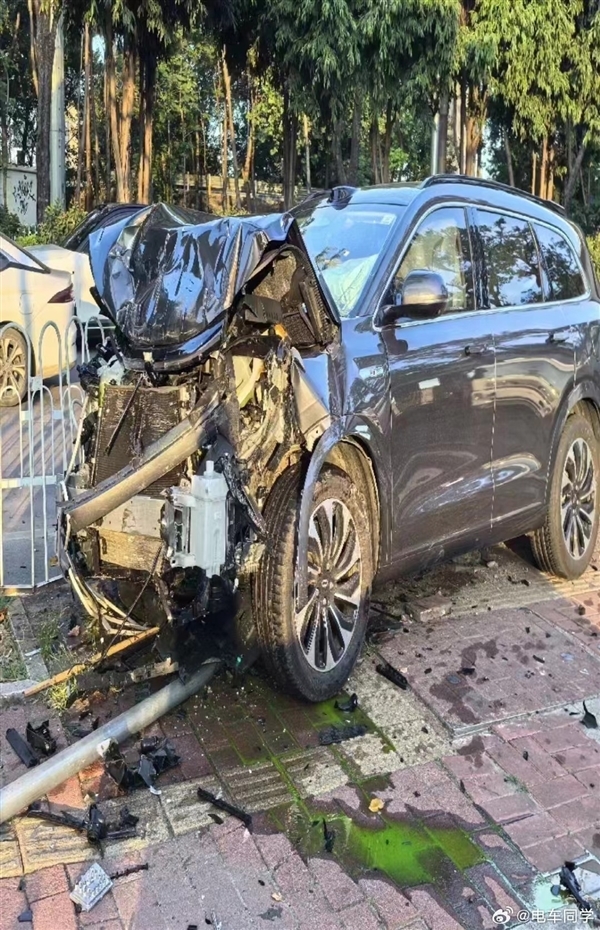
The owner of an AITO M7 reported that the car experienced an abrupt and uncontrollable acceleration, surging from 50 km/h to 100 km/h in moments. Despite repeated attempts to brake, the driver claimed the vehicle failed to respond, leading to a serious accident. The M7 collided with a large truck, struck roadside barriers, and came to a stop after severely damaging a traffic sign and metal fencing. Fortunately, the driver managed to exit the vehicle without major injuries, though the car sustained significant front-end damage.
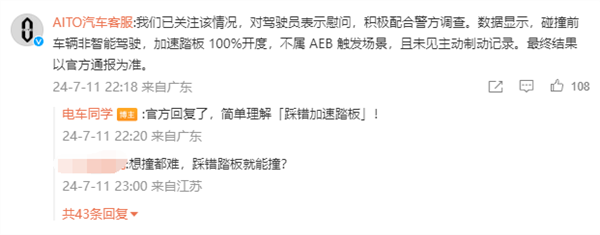
Following the incident, AITO’s customer service team quickly extended condolences to the driver and pledged full cooperation with police investigations. Initial data from AITO indicated that at the time of the accident, the vehicle was in manual driving mode with the accelerator pressed at full throttle (100%). Furthermore, there was no record of automatic braking activation, a finding that has drawn significant public interest and concern.

Independent Evaluation and Report Findings
Unconvinced by AITO’s initial assessment, the vehicle owner commissioned Shenzhen Nanyue Property Appraisal Company for an independent evaluation. According to the appraisal report, which surfaced on social media, the AITO M7 allegedly suffered from “braking failure,” among other issues, which could indicate a potential quality defect. The report also highlighted that some driving data might have been tampered with or removed, adding further speculation to the claims of a manufacturing fault.
The report from Shenzhen Nanyue has stirred extensive discussion online, prompting various reactions from concerned consumers and automobile industry observers. If substantiated, the findings could reveal serious quality control lapses, raising questions about AITO’s commitment to safety and transparency in addressing potential product defects.
AITO’s Official Response
In response to the growing public scrutiny, AITO issued an official statement on November 7, 2024. The company reiterated that its internal analysis found no issues with the M7’s steering or braking functions before the accident. According to AITO, the data analysis showed that the car was in manual driving mode and that the driver had fully pressed the accelerator. AITO argued that no irregularities were detected that would imply an automatic braking system failure, contrary to the Shenzhen appraisal report.
Acknowledging the discrepancy, AITO stated that the matter has now entered judicial proceedings, and any final determination on the vehicle’s safety and potential defects should be based on a court-ordered evaluation. The company emphasized that legal standards should govern the outcome and that any claims of vehicle malfunction should be established in court.
In addition, AITO warned against the spread of misinformation and the deliberate tarnishing of its reputation. The company announced that it had reported the matter to law enforcement and filed a civil lawsuit, seeking to hold those responsible for disseminating false information accountable under Chinese law. AITO’s actions indicate its determination to protect its brand image and ensure that any unverified claims are subject to legal scrutiny.
Public Reaction and Industry Implications
The controversy surrounding AITO’s M7 model has highlighted growing concerns over the reliability of EV technology, especially in terms of automated systems and data integrity. As more consumers turn to electric vehicles, expectations for safety, transparency, and accountability continue to rise. Incidents like these may prompt regulatory bodies to take a closer look at EV safety standards and protocols in China, one of the world’s largest EV markets.
For AITO, the legal and public relations fallout from this case could be substantial, potentially impacting its brand’s trust and consumer perception. Should the independent appraisal findings be confirmed in court, AITO may face not only reputational damage but also financial liabilities and regulatory penalties.
This incident also underscores the importance of independent and reliable third-party evaluations in consumer disputes, particularly in cases where corporate interests may influence assessments of product quality and safety. The resolution of this case could set a precedent for future incidents involving vehicle malfunctions and highlight the critical role of transparent communication between automakers and consumers.